Modern buildings are designed to provide comfort, safety, and long-term protection from changing environmental conditions. However, even a well-designed building can develop water leakage problems when its façade, windows, doors, curtain walls, joints, or waterproofing systems are not properly installed or maintained. A professional water penetration test helps identify these weaknesses before they become expensive and disruptive problems.
Water intrusion can affect more than the appearance of a building. Continuous moisture can contribute to material deterioration, mold growth, damaged finishes, poor indoor air quality, and costly repairs. For this reason, evaluating the water resistance of the building envelope is an important part of construction quality assurance and building performance assessment.
Cornerstone Middle East provides specialized building performance and inspection solutions designed to evaluate façade and envelope performance. Its site hose testing services use calibrated equipment and established methodologies to assess water resistance and identify vulnerable areas.
What Is a Water Penetration Test?
A water penetration test is a controlled assessment used to determine whether water can enter a building through exterior components. The assessment may involve applying water to selected areas of a façade, window, curtain wall, door, glazing system, or other building-envelope component while trained professionals observe the interior and exterior surfaces for signs of leakage.
The objective is not simply to determine whether water is present. A properly conducted assessment helps identify where water is entering, which component may be responsible, and whether the observed condition indicates an installation, sealing, drainage, or waterproofing problem.
Depending on the project requirements, different testing methods and standards may be appropriate. Cornerstone Middle East references standards and methodologies including ASTM E331, ASTM E1105, AAMA 501.2, EN 13051, ISO 7892, and CWCT standards for relevant façade and envelope evaluations.
Why Water Resistance Matters in Building Construction
The building envelope acts as a protective barrier between occupied spaces and outdoor environmental conditions. If water finds a path through joints, seals, frames, cladding, glazing, or other components, the resulting moisture may remain hidden for a considerable period before visible damage appears.
Early detection is therefore an important part of construction quality management. Identifying leakage during construction or commissioning can allow contractors to correct defects before finishes are completed or occupants move into the property. It can also help reduce the possibility of repeated repair work later.
A professional water penetration test can support several important objectives:
- Detecting potential water entry points in the building envelope.
- Checking the effectiveness of seals, joints, glazing, and façade interfaces.
- Verifying installation quality against project requirements.
- Supporting compliance with applicable testing standards.
- Providing documented findings for corrective and remedial work.
These evaluations are particularly valuable for large commercial buildings, high-rise developments, residential projects, curtain-wall systems, and properties where façade performance is critical.
How the Testing Process Works
The exact procedure depends on the system being evaluated, the applicable standard, and the project’s testing specification. The process generally begins with an assessment of the test area. Inspectors examine the façade or component and identify locations that require evaluation.
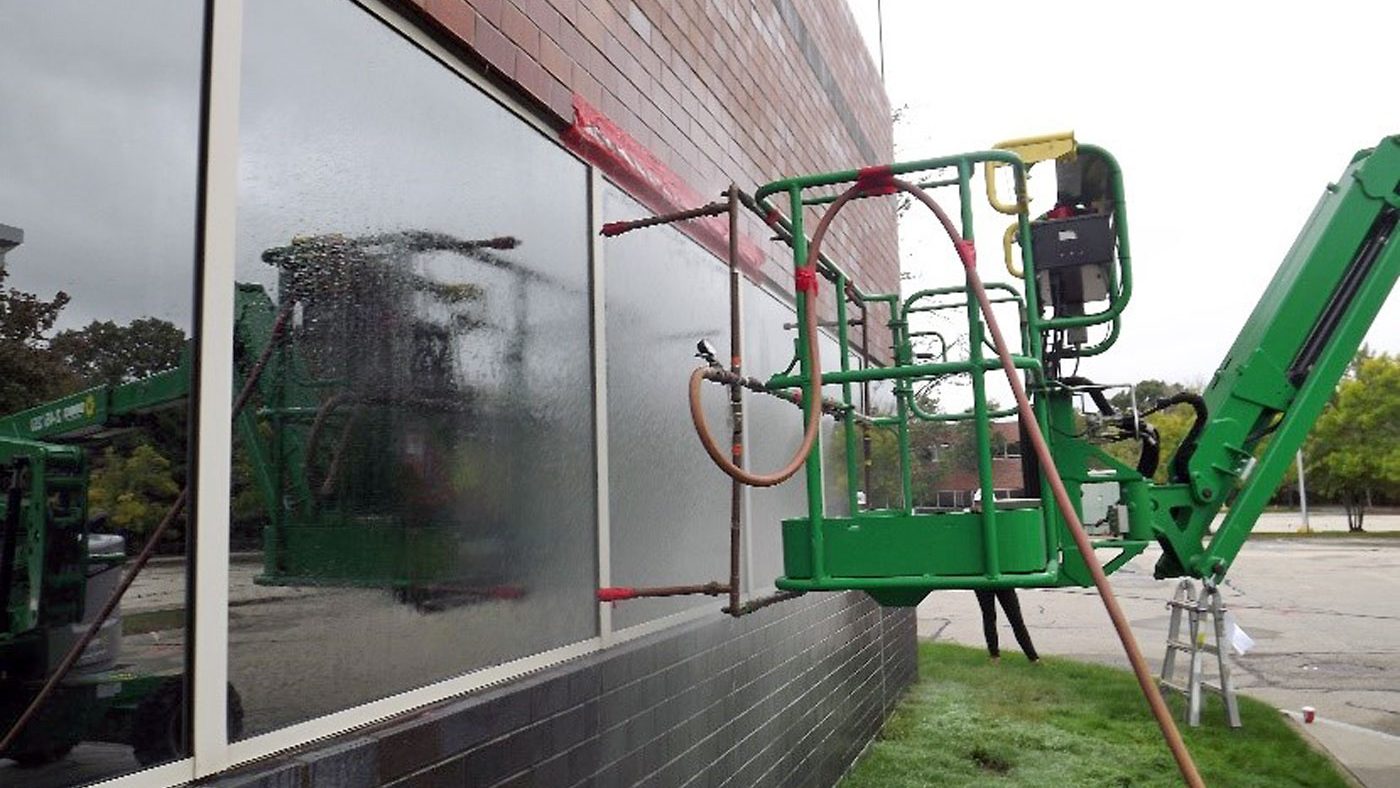
For site hose testing, calibrated water application equipment is used to simulate rainfall conditions on the selected surface. The testing team carefully observes the test area for evidence of water entry. When leakage is detected, the location and relevant observations are documented so that the responsible construction team can investigate the cause.
Cornerstone Middle East describes its site hose testing approach as including site evaluation, calibrated hose testing, leak identification, reporting, and consultation regarding remedial measures.
The testing process should be controlled and documented rather than treated as a simple visual inspection. Proper preparation, calibrated equipment, consistent procedures, accurate observations, and clear reporting all contribute to reliable results.
Areas Commonly Evaluated
Water-resistance assessments can be relevant to several components of a building envelope. Windows and doors are common test locations because their frames, seals, joints, and interfaces can become potential paths for moisture entry.
Curtain walls and storefront systems also require careful evaluation because they contain multiple interconnected components. Poorly sealed joints, installation defects, drainage problems, and interface conditions can contribute to leakage.
Other areas may include:
- Exterior façades and cladding systems.
- Curtain walls and storefronts.
- Windows, doors, and glazing assemblies.
- Sloped glazing systems.
- Building-envelope joints and interfaces.
- Areas where different waterproofing systems meet.
Cornerstone Middle East’s curtain wall testing services include water penetration assessment alongside structural, air infiltration, thermal, and impact performance evaluations.
Standards Used for Water Resistance Evaluation
Testing standards provide structured procedures that help ensure assessments are carried out consistently. The appropriate standard depends on the building component, project specification, location, and intended purpose of the evaluation.
For example, ASTM E331 addresses water penetration of exterior windows, skylights, doors, and curtain walls under a uniform static air pressure difference. ASTM E1105 focuses on field determination of water penetration in installed exterior windows, skylights, doors, and curtain walls under uniform or cyclic static pressure conditions. AAMA 501.2 is used as a field water leakage check for installed storefronts, curtain walls, and sloped glazing systems.
CWCT methodologies may also be relevant for systemized building envelopes, particularly where more comprehensive façade performance evaluation is required. The correct procedure should always be selected according to the project’s approved specification rather than using one testing method for every building.
Importance of Professional Inspection and Reporting
A test is only useful when its findings can be understood and acted upon. Professional inspection teams therefore need to document observations clearly and connect identified leakage with potential corrective actions.
A detailed report can provide information about the tested location, test conditions, observed leakage, affected components, and recommended next steps. This documentation can be useful for contractors, consultants, developers, facility managers, and other stakeholders involved in resolving building-envelope issues.
Cornerstone Middle East emphasizes comprehensive reporting as part of its service, providing test results, analysis, and recommendations intended to support remedial action.
For projects undergoing construction, these reports can also contribute to quality assurance records. For existing buildings, they can help facility teams understand recurring moisture problems and determine where repairs or further investigation may be necessary.
The Role of Water Testing in Existing Buildings
Water-related problems do not occur only in newly constructed properties. Existing buildings may experience leakage because of aging sealants, damaged membranes, deteriorated joints, façade movement, poor drainage, or previous repair work.
When the source of a leak is unclear, a broader water infiltration investigation may be required. Cornerstone Middle East describes its water infiltration studies as combining visual examination, moisture-meter analysis, infrared thermography, water testing, and building-envelope evaluation.
This approach is valuable because moisture observed inside a building does not always indicate that the visible location is the actual point of entry. Water can travel through concealed pathways before appearing at an interior wall, ceiling, or floor. Combining inspection methods can therefore provide a more complete understanding of the problem.
Benefits for Developers, Contractors and Building Owners
Investing in professional façade and envelope evaluation can provide practical benefits throughout a property’s life cycle. During construction, it can help identify defects while corrective work is still relatively accessible. Before handover, it can provide additional confidence that critical envelope components meet specified performance requirements.
For building owners and facility managers, periodic investigation can help identify developing problems before they cause extensive damage. Early detection may reduce repair costs, minimize disruption, and support better maintenance planning.
The major benefits include:
- Earlier identification of water-entry risks.
- Better control of construction quality.
- Reduced possibility of concealed moisture damage.
- Improved durability of façade components.
- Stronger documentation for project stakeholders.
- More informed decisions about repairs and maintenance.
Choosing the Right Testing Approach
Every building has different façade materials, construction details, exposure conditions, and performance requirements. Therefore, selecting a testing method should begin with an understanding of the building system and project specification.
A simple site hose evaluation may be suitable for certain diagnostic applications, while other projects may require pressure-based or more comprehensive façade testing. The testing team should consider the relevant standard, component type, test location, stage of construction, and expected environmental exposure.
This is where experienced technical professionals can add value. Cornerstone Middle East works across building performance and inspection services, with a focus on accurate assessment, reliable results, and practical recommendations.
Conclusion
A water penetration test is an important tool for evaluating the performance of a building envelope and identifying weaknesses before water intrusion leads to larger problems. From windows and doors to curtain walls, glazing systems, façades, and critical joints, controlled water testing can provide valuable evidence about the effectiveness of exterior building components.
The value of testing goes beyond finding leaks. It supports construction quality, helps verify performance requirements, assists with remedial decisions, and contributes to the long-term durability of buildings. With professional assessment, calibrated equipment, appropriate standards, and detailed reporting, property stakeholders can make better-informed decisions about building performance.
Cornerstone Middle East offers specialized testing and inspection solutions for building envelopes and related systems, helping clients evaluate performance and address potential vulnerabilities with a structured technical approach.
For any project where moisture resistance and façade reliability matter, incorporating appropriate water-resistance evaluation into the construction, commissioning, or maintenance process can be an important investment in the building’s long-term performance.