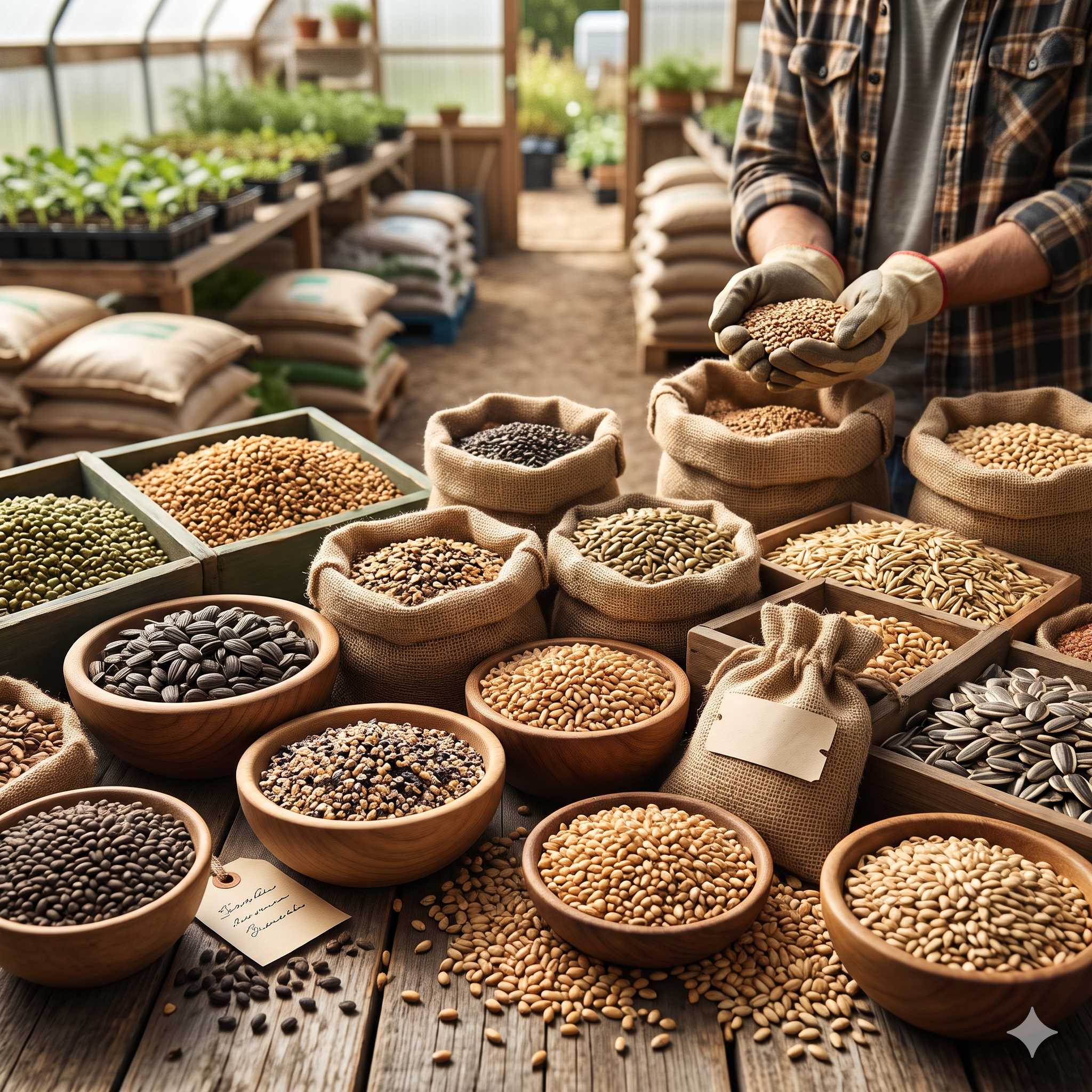
Every successful harvest begins with a single decision: which seed goes into the soil. Whether you manage a commercial farm, run a plant nursery, supply a garden centre, or distribute agricultural inputs, the quality and cost of your seed stock shape your profit long before the first sprout appears. That is why buying in bulk has become the preferred route for serious growers and resellers, and why wholesale seeds are now a core part of how modern agriculture and horticulture operate.
Buying seed in large quantities is not simply about getting a lower price per kilogram. It is about securing consistent genetics, dependable germination, and a steady supply across the entire growing season. A grower who orders small retail packets every few weeks faces uneven quality, fluctuating prices and the constant risk of stock running out at a critical sowing window.
This guide explains what wholesale seed buying involves, the main benefits, the different seed categories, how seeds are used across industries, and what to check before you commit to a supplier. It also explains how Apex Star Trading approaches bulk seed supply so that buyers can make informed, confident decisions. The advice here reflects widely accepted agricultural practice and the practical realities that buyers face when sourcing seed at scale.
What Does Buying Wholesale Seeds Really Mean?
Buying wholesale seeds means purchasing seed in large, pre-agreed quantities directly from a trading company, importer, or processor instead of through small retail channels. Orders are usually measured in kilograms, quintals or metric tonnes rather than individual packets. Because the supplier handles larger volumes, the cost of cleaning, grading, packing and shipping is spread over more units, and that saving is passed on to the buyer.
This model suits farmers planning full-season sowing, nurseries producing seedlings for resale, food processors who need consistent raw material, and retailers who repackage seed under their own labels. A knowledgeable trading partner such as Apex Star Trading helps these buyers match the right seed to the right purpose, which matters as much as the price on the invoice.
Key Benefits of Buying in Bulk
Lower cost per unit
The most obvious advantage is price. Buying wholesale seeds reduces the per-kilogram cost considerably compared with retail packaging, because packaging, marketing and small-lot handling costs are removed. For a farm sowing dozens of acres, or a retailer stocking hundreds of customers, even a modest saving per kilogram adds up to a meaningful improvement in margin over a single season.
Consistency across the whole crop
When all of your seed comes from one lot, plants tend to germinate, flower and mature at similar times. This uniformity makes irrigation, fertilising, pest control and harvesting far easier to schedule. Mixed lots bought at different times often behave differently in the field, which complicates management and can reduce overall yield.
Reliable supply and better planning
Seasonal sowing windows are short. A delay of even a week can affect yield and market timing. Placing a single, well-planned order for wholesale seeds with a trusted supplier means seed is available when the soil and weather are ready, rather than when stock happens to reach the shelf.
Quality control and traceability
Reputable suppliers can provide information about seed origin, purity and germination performance for each lot. That traceability is difficult to obtain from casual retail purchases and gives bulk buyers a stronger basis for resolving any problem that appears later.
Flexibility for businesses that resell
Retailers, agri-input shops and nurseries gain the freedom to repack, brand and price seed according to their own market. Wholesale seeds give resellers room to build a margin while still offering customers fair prices.
Main Types of Seeds Available in Bulk
Seed is not one product. Different crops, climates and end uses call for different categories. The groups below are the ones most commonly traded as wholesale seeds.
Vegetable seeds
Vegetable seeds include tomato, chilli, onion, okra, cucumber, gourd, cabbage, carrot, spinach and many other crops. These are in steady demand from commercial vegetable growers, kitchen-garden suppliers and greenhouse operators. Buyers should look closely at variety characteristics such as disease tolerance, fruit size, shelf life and suitability for local temperature and soil.
Field crop and cereal seeds
Wheat, rice, maize, sorghum and millets are the backbone of staple food production. Because these crops are sown over large areas, the volume per order is high, and uniform germination has a direct impact on yield per acre. Moisture content and purity are especially important for this group.
Pulse and oilseed varieties
Lentils, chickpeas, green gram and black gram are valued for their protein content and their ability to improve soil nitrogen. Oilseeds such as sunflower, mustard, sesame and groundnut serve both the edible-oil industry and direct consumption. Both groups are widely traded in bulk and are important to farmers who rotate crops to maintain soil health.
Spice and herb seeds
Cumin, coriander, fennel, fenugreek, mustard, cardamom and similar seeds are used both for cultivation and, in many cases, as culinary ingredients. Spice buyers care about aroma, oil content, colour and cleanliness, and these qualities vary noticeably between lots and origins.
Flower and ornamental seeds
Marigold, zinnia, cosmos, sunflower and a wide range of seasonal flowers are purchased in volume by nurseries, landscapers, event decorators and municipal gardening teams. Germination rate and colour consistency are the main quality factors here.
Fodder, cover crop and green manure seeds
Berseem, lucerne, oats and sorghum-sudan grass feed livestock, while crops such as sunn hemp and clover protect and enrich the soil between main seasons. These seeds are typically needed in large quantities, which makes bulk purchasing the only practical option for most buyers.
Edible, snacking and health seeds
Sunflower, pumpkin, watermelon, chia, flax and sesame seeds are consumed directly and are also used in bakeries, health-food brands and packaged snacks. Food-grade cleanliness, correct storage and accurate labelling matter greatly in this category.
Common Uses of Seeds Across Industries
Seed serves a surprisingly broad range of purposes, which is why wholesale seeds attract buyers from so many sectors.
Commercial agriculture is the largest user. Farmers sow seed to produce grain, vegetables, pulses, oilseeds and fibre, and they rely on stable supply to protect their cropping calendar.
Horticulture and nurseries use seed to raise seedlings, which are then sold to home gardeners or transplanted into larger farms. A nursery’s reputation depends heavily on how uniform and healthy its seedlings are, so seed quality is the foundation of its business.
The food and beverage industry uses many seeds as ingredients. Sesame, sunflower, flax and pumpkin seeds appear in bakery products, cereals, spice blends, energy bars and cooking oils.
Landscaping and ornamental projects, from highway verges to hotel gardens, depend on flower and grass seed purchased in large volumes.
Livestock and dairy operations use fodder seed to grow nutritious feed, lowering their dependence on purchased feed during difficult months.
Finally, home gardening has grown strongly, and retailers who stock seed for this audience often source from wholesale channels and repack in smaller quantities.
How to Choose the Right Seed Supplier
Choosing a supplier is a trust decision as much as a price decision. A cheap lot that fails to germinate costs far more than a slightly expensive lot that performs reliably. Before placing a large order for wholesale seeds, experienced buyers check the following points.
- Germination and purity: Ask for recent test results and make sure the percentages meet the standard for your crop.
- Seed origin and variety: Confirm the variety name, the growing region and the harvest season, since freshness affects vigour.
- Moisture level and storage history: Seed stored damp or in heat loses viability quickly.
- Packaging and labelling: Bags should be sealed, clearly marked with lot numbers, and strong enough for transport.
- Documentation: Depending on your market, you may need invoices, quality reports and, for cross-border trade, the relevant phytosanitary and customs papers.
- Communication and after-sales support: A supplier who answers questions clearly before the sale is more likely to help if something goes wrong afterwards.
When possible, request a small sample before committing to a full order. Sowing a test batch in your own soil and climate is the most reliable way to confirm performance, and any honest supplier will understand why you ask.
Why Choose Apex Star Trading for Wholesale Seeds
Apex Star Trading serves buyers who want a dependable supply of wholesale seeds rather than one-off transactions. The company’s approach is built around the needs that growers, nurseries and resellers describe most often: consistent quality, clear communication, fair pricing and reliable delivery.
A focus on quality you can verify
Seed quality should be something you can check, not simply something you are told. Apex Star Trading emphasises careful sourcing and grading so that each consignment meets the expectations buyers set at the time of order. Customers are encouraged to ask about lot details, specifications and handling, and to evaluate samples before placing larger orders.
A range that supports different buyers
Buyers rarely need only one kind of seed. A nursery may want vegetable and flower seed, while a food brand may need sesame, sunflower or spice seeds. By offering a broad range of categories, Apex Star Trading allows customers to consolidate purchases with one trading partner, saving time, paperwork and coordination effort.
Transparent and fair pricing
Bulk buyers plan budgets months ahead, so predictability matters. Apex Star Trading aims to quote clearly and to explain what is included, so that there are no unpleasant surprises at invoicing or delivery. Straightforward pricing is a basic form of respect for the customer’s time.
Responsive, practical support
Choosing seed is not always simple, and buyers benefit from talking to people who understand sowing seasons, storage and logistics. The team at Apex Star Trading is available to discuss requirements, quantities and timelines, and to help customers think through practical questions before an order is confirmed.
Built for long-term relationships
A supplier earns trust through repeat performance. Apex Star Trading views each order as the start of a working relationship, which is why consistency, honesty about availability and attention to delivery timelines are treated as priorities. For businesses that depend on seed arriving in good condition and on schedule, that mindset is often the deciding factor.
Storage and Handling Tips for Bulk Seed
Even excellent seed can deteriorate if it is handled carelessly after delivery. Three principles protect your investment.
First, keep seed cool and dry. Heat and humidity are the main causes of lost viability, so store bags in a well-ventilated room away from direct sunlight and off the bare floor, ideally on pallets.
Second, protect seed from pests and moisture. Check bags regularly for signs of insects, mould or dampness, and avoid storing seed near fertilisers, pesticides or other chemicals that can taint or harm it.
Third, keep records. Note the lot number, date of receipt and variety for every consignment. If germination is ever lower than expected, clear records make it much easier to find the cause and to speak with your supplier about it.
Frequently Asked Questions
Is bulk seed really cheaper than retail packets?
In nearly all cases, yes. Larger quantities lower the cost of packaging, marketing and handling per unit. The real value, however, is the combination of lower cost with consistent quality and dependable supply.
How large must an order be to qualify as wholesale?
Minimum quantities differ by seed type and supplier. The best approach is to share your requirement with the supplier and discuss what is practical for your scale.
Can I test seed before placing a large order?
Yes, and you should. A small trial sowing, or a lab germination test, helps confirm that the seed suits your conditions before you commit to volume.
Conclusion
Seed is the smallest input in farming and horticulture, yet it carries the greatest influence over the result. Choosing the right supplier, the right variety and the right quantity can protect yields, improve margins and reduce stress during the busiest weeks of the year. Wholesale seeds give growers, nurseries, food businesses and retailers a practical way to achieve all three, provided the supplier is transparent about quality and consistent in delivery.
Before your next order, define your crop requirements, ask for samples and documentation, and compare suppliers on reliability as well as price. If you are looking for a partner who values clear communication and steady performance, Apex Star Trading welcomes your enquiry. Reach out through the company website at https://apexstartrading.com/ to discuss your requirements and plan a seed supply that supports your next successful season.