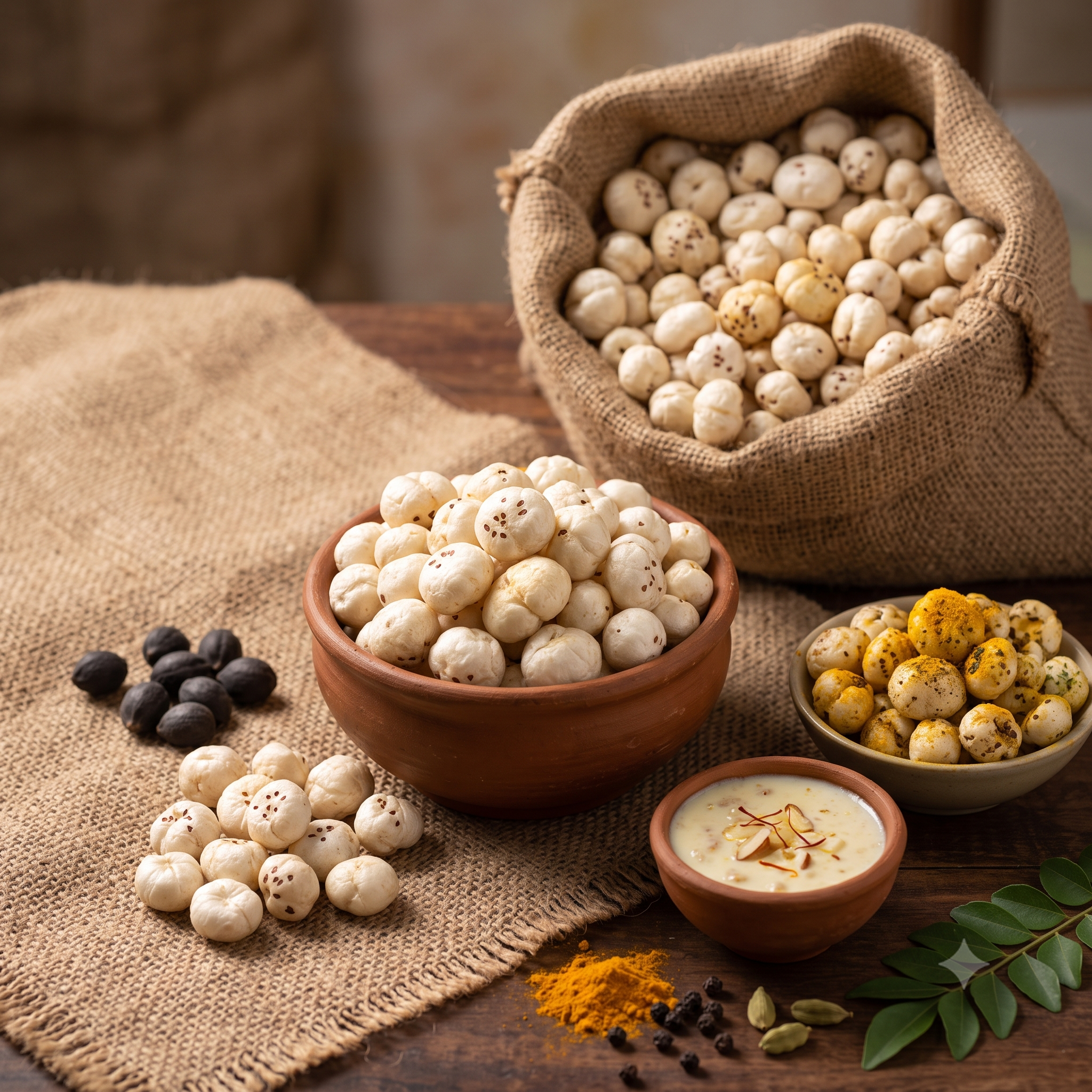
In many Indian homes, a bowl of lightly roasted, crunchy puffed seeds appears during festivals, fasting days, and evening tea. For generations these seeds were a regional specialty of the wetlands of eastern India. Today, makhana fox nuts have reached health food stores, restaurant menus, and grocery shelves across the world. Their light texture, mild flavour, and impressive nutritional profile have made them a favourite among nutritionists, chefs, and everyday snackers.
This guide explains what makhana fox nuts are, how they are grown and processed, and what makes them valuable for your health. It also covers practical ways to use them, how to judge quality, and how to store them. Throughout, we draw on the trade experience of Apex Star Trading, a company that works closely with growers, processors, and buyers in the dry fruit and seed sector.
What Are Makhana Fox Nuts and Where Do They Come From?
Despite the name, makhana fox nuts are not nuts. They are the edible seeds of Euryale ferox, an aquatic plant that grows in still, shallow ponds and wetlands. The plant has large, round, spiny leaves that float on the water. Its seeds are known by many names, including fox nuts, lotus seeds, gorgon nuts, and phool makhana.
Most of India’s production comes from the Mithila region of Bihar, where farmers have cultivated the crop in village ponds for generations. The process is labour-intensive and relies on traditional skill. Seeds are collected from the pond bed after they mature and sink. They are then cleaned, sun-dried, graded by size, and heated until the hard black shell cracks and the white kernel pops open, much like popcorn. Skilled workers do much of this stage by hand, which is why the final product carries a premium.
Reputable suppliers such as Apex Star Trading pay close attention to this chain, from harvest through grading and packing, because small differences in handling decide whether the kernels reach the customer crisp, white, and uniform.
Nutritional Profile of Makhana Fox Nuts
Nutrition is the main reason makhana fox nuts have become so popular. As a general guide, a 100-gram serving of plain popped makhana provides roughly 340 to 360 calories, with about 9 to 10 grams of protein and very little fat. The remainder is mostly complex carbohydrate, along with dietary fibre. Makhana is also naturally low in sodium and contains useful minerals such as calcium, magnesium, phosphorus, and potassium. Exact values vary with variety, processing, and preparation, so always check the label of the product you buy.
Their appeal lies in what they do not contain. Plain makhana has no cholesterol, no added sugar, and no gluten, which makes it suitable for many special diets. A typical snack portion is about 30 grams, which is a large, satisfying bowl because the seeds are so light.
Health Benefits of Makhana Fox Nuts
Traditional food cultures have valued these seeds for centuries, and modern nutrition science supports many of the reasons. This article is for general information and is not medical advice. People with health conditions should consult a doctor or registered dietitian before making major dietary changes.
Supports weight management. Because makhana is low in fat and high in volume, it fills the stomach without a heavy calorie load. Replacing deep-fried snacks with roasted makhana is one of the simplest swaps for anyone trying to manage their weight. The protein and fibre content also help you feel full for longer, which reduces mindless snacking between meals.
Good for heart health. The seeds are low in sodium and saturated fat, and they provide magnesium and potassium, two minerals linked to healthy blood pressure. Choosing plain roasted makhana over salty packaged snacks can lower daily sodium intake over time.
Suitable for blood sugar awareness. Makhana has a relatively low glycaemic impact compared with many refined snacks. Its fibre and protein slow the absorption of carbohydrates. People managing diabetes often include it in their diet, but they should still watch portion size and follow their doctor’s guidance.
Rich in antioxidants. Research on Euryale ferox has identified compounds such as flavonoids and polyphenols, which help the body counter oxidative stress. These compounds are part of why the seeds have long been used in traditional wellness practices.
Gentle on digestion. Makhana is easy to digest, so it is commonly given to children, older adults, and people recovering from illness. Its mild taste also makes it a safe first food for those who find spicy or heavy snacks hard to tolerate.
Fits many diets. Makhana is naturally gluten-free, vegan, and acceptable during many religious fasts. This versatility is one reason demand for makhana fox nuts keeps growing in both Indian and international markets.
Popular Uses of Makhana Fox Nuts in the Kitchen
The neutral flavour of makhana is its greatest culinary strength, since it absorbs whatever seasoning or sauce you pair with it. Here are the most common ways people use makhana fox nuts at home and in food businesses.
The simplest preparation is roasting. Heat a teaspoon of ghee or olive oil in a pan, add the seeds, and roast on low heat for ten to fifteen minutes until they turn crisp and snap easily. Season with rock salt, black pepper, chaat masala, or a pinch of turmeric. This makes an excellent tea-time or office snack.
Makhana also works well in traditional dishes. Makhana kheer, a creamy pudding made with milk, sugar, cardamom, and nuts, is a festival favourite across northern India. Savoury recipes include makhana curry cooked in a rich tomato and cashew gravy, and raita made with yoghurt and mild spices. During fasting days, cooks often prepare it without onion or garlic.
Modern kitchens have taken the ingredient in new directions. Ground makhana flour can be used in pancakes, energy bars, and baby food. Whole seeds are folded into trail mixes, granola, and muesli for extra crunch. Packaged food brands now offer flavoured varieties such as peri-peri, cheese, and caramel, which has opened a large retail category.
For hotels, caterers, and snack manufacturers, the key requirement is consistency. Uniform size, colour, and crispness decide whether a recipe turns out the same way every time, and that is where a dependable supplier makes a real difference.
How to Identify Premium Quality Makhana Fox Nuts
Whether you are a household buyer or a bulk purchaser, a few practical checks will help you separate good product from poor product.
Look first at colour. Good makhana is clean, bright white or a very light cream. Yellowish or grey kernels may indicate poor drying, long storage, or exposure to moisture. Next, check size and shape. Premium grades have large, round, uniform kernels, and sellers usually grade them by size, often described in “suta” categories. Larger sizes cost more and look impressive in gifting packs and desserts.
Texture and sound also matter. A well-popped kernel feels light and breaks with a clean crunch. Soft or chewy pieces suggest moisture has crept in. Finally, smell the product. It should have a fresh, neutral aroma, with no musty or sour note. Broken pieces, dark specks, and leftover shell fragments should be minimal.
Packaging is equally important. Quality makhana should arrive in sealed, moisture-resistant packs, because humidity quickly ruins its crispness. If you are buying in bulk, ask the supplier about grading, moisture control, and batch consistency before placing a large order.
Why Choose Apex Star Trading for Makhana Fox Nuts
Choosing a supplier is as important as choosing the product. Buyers need dependable quality, honest communication, and steady supply, and Apex Star Trading builds its approach around these needs.
The company focuses on sourcing makhana fox nuts that meet clear quality standards for colour, size, crispness, and cleanliness. By working with trusted processors and carrying out careful grading, Apex Star Trading aims to deliver product that looks and tastes the same from one order to the next. That consistency is what retailers, food manufacturers, and restaurant owners value most.
Transparency is another priority. Apex Star Trading discusses grades, packaging options, and quantities openly, so buyers know exactly what they are getting before they commit. Whether you need small trial quantities or larger volumes for regular supply, the team can guide you toward the grade and pack size that suits your business and budget.
Reliable packing and timely dispatch complete the picture. Properly sealed packs protect the delicate seeds from moisture and breakage during transport, and clear communication on timelines helps buyers plan inventory without surprises. For anyone looking for a long-term partner in the makhana trade, these practices build the trust that repeat business depends on.
To confirm current product ranges, grades, and specifications, we recommend visiting the Apex Star Trading website or contacting the team directly.
Storage and Shelf-Life Tips
Even the best seeds lose their crunch if stored carelessly. Keep makhana in an airtight glass or steel container in a cool, dry place away from sunlight and steam. If you open a large pack, transfer the seeds into smaller containers so the whole stock is not exposed to air each time. If the seeds soften, a few minutes of dry roasting in a pan will restore their crispness. When stored correctly, makhana fox nuts stay fresh for several months.
Frequently Asked Questions
Are makhana and fox nuts the same thing?
Yes. Makhana is the Hindi name, and fox nut is the common English name for the popped seeds of Euryale ferox.
Can I eat them every day?
In moderate portions, most healthy adults can enjoy them daily as part of a balanced diet. A handful of about 30 grams is a sensible serving. Anyone with medical concerns should seek professional advice.
Are they suitable for children?
Yes, in age-appropriate forms. For very young children, ground makhana or softened preparations such as kheer are safer than whole seeds, which can be a choking risk.
Conclusion
Makhana has travelled from quiet ponds in eastern India to kitchens and boardrooms around the world, and its popularity is well earned. It is light, versatile, and nutritious, and it fits comfortably into modern diets without sacrificing the taste of tradition. Whether you roast them for an evening snack, simmer them into a festive dessert, or buy them in bulk for a food business, makhana fox nuts offer excellent value when the quality is right.
The key is to buy from a source you can trust. Apex Star Trading combines careful sourcing, clear grading, and honest service to help customers get the best from this remarkable seed. If you are ready to explore premium makhana for your home, store, or brand, reach out to Apex Star Trading and start a conversation about your requirements.