In modern buildings, whether residential, commercial, or industrial, HVAC (Heating, Ventilation, and Air Conditioning) systems play a crucial role in maintaining comfort and indoor air quality. A vital yet often overlooked component of HVAC performance is duct leakage. Duct leakage testing is the process of identifying and measuring unintended air leaks in ductwork that reduce system efficiency, increase energy costs, and potentially compromise safety.
At Cornerstone Middle East, duct leakage testing is performed using advanced diagnostic equipment and standards-based procedures to ensure complete system performance and regulatory compliance. This blog explains in detail what duct leakage testing involves, why it matters, how it is conducted, and what standards and benefits it offers.
Understanding Duct Leakage in HVAC Systems
Ducts are responsible for transporting conditioned air from HVAC units to different parts of a building. Over time, due to poor installation, material wear, or thermal expansion, ducts may develop gaps, cracks, or loose joints, leading to air leakage.
Unsealed or poorly connected ducts may lose 20% to 30% of the air moving through them. This translates into lost energy, poor ventilation, increased utility costs, and uneven temperature control across rooms. Duct leakage testing is the primary way to quantify and resolve these issues before they impact performance or safety.
What Is Duct Leakage Testing?
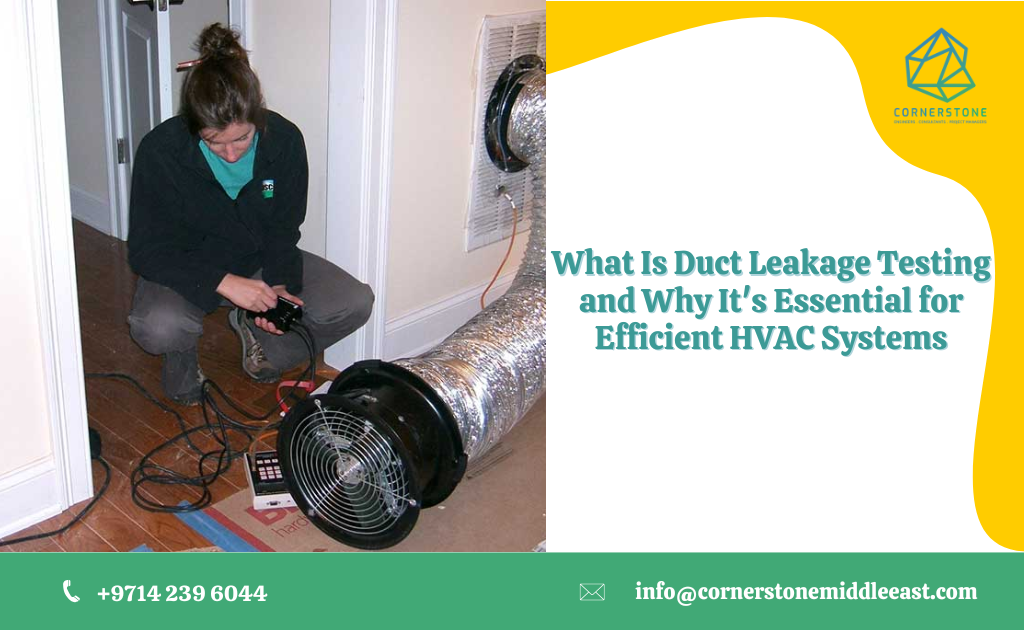
Duct leakage testing is a quantitative assessment of air escaping from the duct system. It involves pressurizing the ducts using a calibrated fan and measuring the air loss using specialized tools. The results help in identifying the severity of leakage and guiding corrective actions such as sealing or replacing duct components.
Testing is performed either on newly installed ductwork (before ceiling or wall enclosures) or on existing systems during maintenance or retrofitting. The goal is to ensure that the system maintains optimal pressure and airflow to meet performance and safety standards.
Key Reasons for Conducting Duct Leakage Testing
- Energy Efficiency and Cost Reduction
Leaky ducts force HVAC units to work harder to maintain set temperatures, increasing energy consumption. Duct leakage testing detects inefficiencies early, allowing for corrections that reduce power bills and extend equipment lifespan. - Improved Indoor Air Quality
Leaks in return ducts may pull in contaminants from crawl spaces, attics, or mechanical rooms, affecting indoor air quality. Testing ensures a sealed system that delivers clean air without external pollutants. - Balanced Airflow and Thermal Comfort
Uneven airflow due to leaks can cause certain zones to be warmer or colder than others. Proper testing and repair ensure consistent temperature control across the entire building. - Regulatory Compliance
Many green building certifications (LEED, Estidama, etc.), government energy codes, and health standards require duct leakage testing as part of the commissioning and handover documentation. - Fire and Smoke Control
In large buildings or critical environments (like hospitals or data centers), ducts are required to resist smoke and fire spread. Testing ensures airtightness necessary for pressurization and containment strategies.
How Is Duct Leakage Testing Performed?
At Cornerstone Middle East, the duct leakage testing process follows precise procedures to deliver reliable results:
- System Preparation
All supply and return openings (diffusers, grilles) are sealed using airtight covers or tapes. This ensures no air escapes through intended openings, isolating leakage to cracks or connections. - Connection to Testing Equipment
A blower fan is connected to one section of the ductwork, typically through a temporary duct collar or adapter. This fan creates either positive or negative pressure within the system. - Pressurization and Measurement
The blower increases air pressure to a predetermined level (e.g., 25 Pascals). Leakage is measured by the amount of air required to maintain that pressure, using digital flow meters and pressure gauges. - Calculation and Classification
Leakage is expressed as a percentage of system airflow or in terms of CFM (cubic feet per minute) per 100 square feet of duct surface area. The results are compared to SMACNA or ASHRAE standards for compliance. - Documentation and Recommendations
A detailed report is prepared with system specifications, measured leakage values, and pass/fail status. If leakage exceeds acceptable limits, recommendations are given for sealing with mastic, UL tape, or insulation reinforcements.
Standards Followed in Duct Leakage Testing
Cornerstone Middle East adheres to global and local standards for duct leakage testing. These include:
- SMACNA (HVAC Air Duct Leakage Test Manual):
Provides classifications of duct leakage based on pressure class and duct size. Common classes are CL-3, CL-6, and CL-12. - ASHRAE 90.1 and 62.1 Standards:
Define energy efficiency targets and minimum ventilation requirements. - ISO 9972:
Standard for measuring building air permeability, often referenced in building commissioning. - Estidama and Dubai Green Building Regulations:
Local compliance frameworks that mandate duct leakage testing for certain occupancy types and floor area thresholds.
When Should You Conduct Duct Leakage Testing?
- Pre-commissioning Phase:
During construction, before ceilings are closed, for easy access to ductwork. - After Major Repairs or Retrofitting:
To ensure old ductwork is performing efficiently after upgrades. - Periodic Maintenance Cycles:
As part of preventive maintenance plans for large facilities like malls, hospitals, and airports. - Before Green Building Certification Submissions:
To fulfill testing prerequisites of LEED, BREEAM, or other frameworks.
Consequences of Ignoring Duct Leakage
- Increased monthly energy costs
- Compromised indoor air quality and comfort
- Regulatory violations and failed inspections
- Overloaded HVAC equipment leading to early breakdowns
- Fire safety hazards due to smoke leakage in critical systems
Benefits of Choosing Cornerstone Middle East for Duct Leakage Testing
Cornerstone Middle East is a trusted name in MEP testing and inspections across the UAE and GCC region. Their duct leakage testing services offer:
- Trained Technicians: Certified professionals experienced in international testing protocols.
- Modern Equipment: Use of calibrated fans, manometers, and digital pressure monitoring tools.
- Custom Solutions: Testing approaches tailored to project needs – from residential towers to industrial warehouses.
- Full Documentation: Complete technical reports with CAD-based duct layouts, leakage points, and recommendations.
- Quick Turnaround: Efficient testing schedules that align with project deadlines and reduce handover delays.
Conclusion
Duct leakage testing is more than just an inspection—it’s an investment in building performance, safety, and sustainability. Ensuring that air flows only where it should helps reduce energy waste, improve comfort, and comply with essential building codes.
Whether you’re a project consultant, contractor, or facility manager, duct leakage testing should be an essential part of your quality control and maintenance strategy. With deep expertise and a commitment to precision, Cornerstone Middle East delivers duct leakage testing services that help you meet performance goals and regulatory standards with confidence.