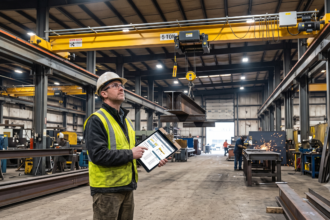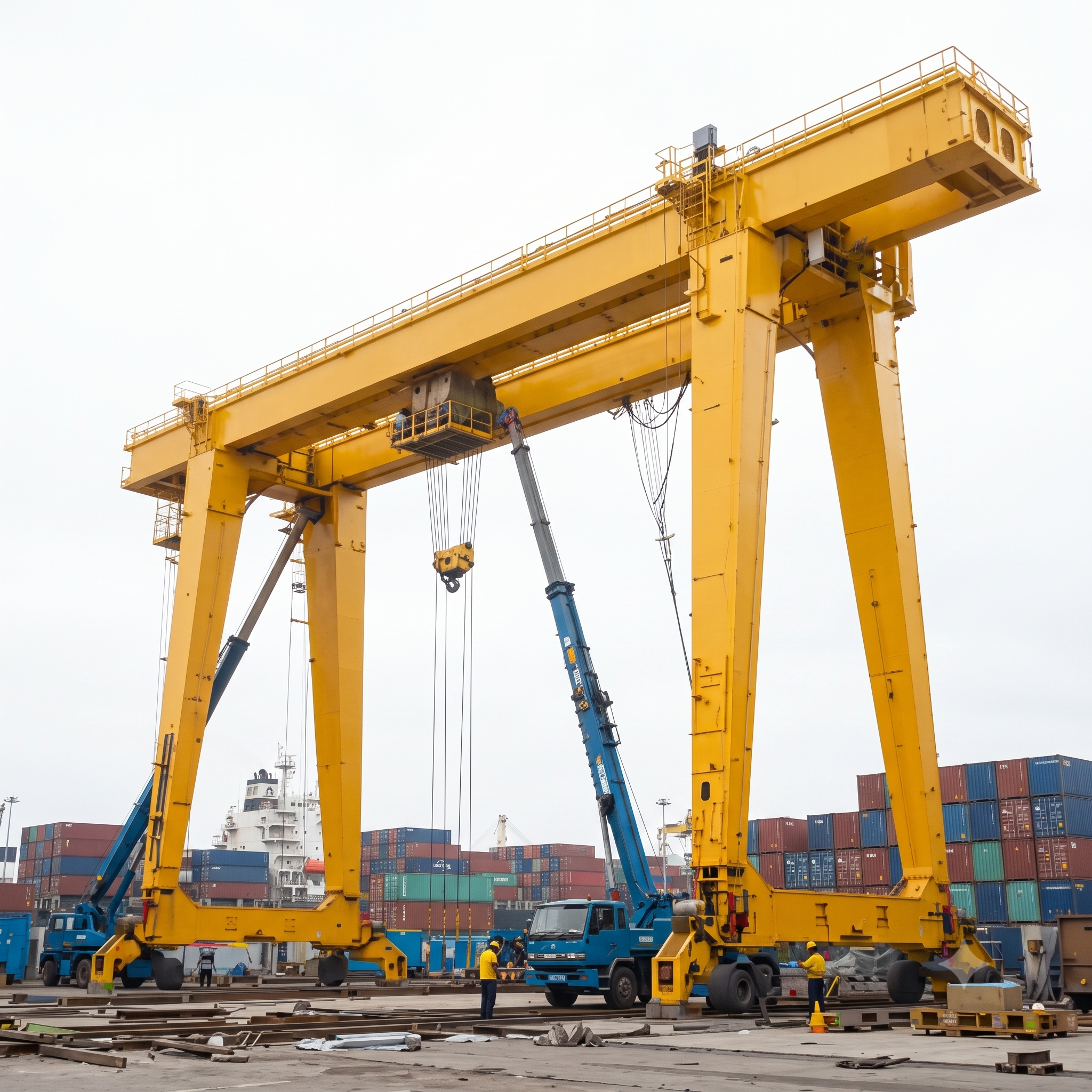
Modern industries depend on reliable lifting systems to move heavy materials safely, quickly, and efficiently. In manufacturing plants, steel facilities, fabrication units, warehouses, construction sites, and industrial yards, the structural components supporting a crane are just as important as the lifting mechanism itself. Among these components, a gantry girder plays a vital role in providing structural support, stability, and dependable movement for heavy-duty lifting operations.
A well-designed gantry girder helps distribute loads effectively while maintaining the required strength and rigidity during repeated crane movements. Its design must consider factors such as crane capacity, span, operating conditions, load frequency, wheel loads, and environmental forces. Therefore, selecting the right engineering partner is essential for achieving safe and efficient crane performance.
Dhiraj Crane has been serving the industrial lifting sector for more than 50+ years, creating customer value through design, fabrication, customization, timely delivery, and after-sales service. Established in 1974, the company has developed extensive expertise in industrial cranes and material handling solutions, including gantry cranes, EOT cranes, and customized lifting equipment.
What Is a Gantry Girder and Why Is It Important?
A gantry girder is a structural beam designed to support and transfer the loads generated by a gantry crane system. Depending on the crane configuration, it works as an important load-bearing member that helps maintain structural stability during lifting, lowering, and horizontal travel.
The engineering of a gantry girder is particularly important because cranes frequently operate with dynamic loads. Unlike a stationary structural beam, crane-supporting structures experience repeated loading, braking forces, acceleration, vibration, and lateral movement. If the structure is not appropriately designed, excessive deflection, fatigue, misalignment, and premature wear can affect crane performance.
The girder must therefore be engineered according to the specific operating requirements of the facility. Proper calculations help determine the required section, material properties, connections, support arrangement, and safety considerations.
Key Factors Considered in Gantry Girder Design
Designing a gantry girder requires more than selecting a large steel section. Engineers must understand how the crane will operate and what loads the supporting structure will experience throughout its service life.
Important design considerations generally include:
- Crane lifting capacity and rated load
- Crane span and overall structural dimensions
- Wheel loads and load distribution
- Horizontal and longitudinal forces
- Operating frequency and duty classification
- Wind loads for outdoor installations
- Structural deflection and stability
- Material strength and fabrication requirements
Each factor influences the final design. For example, a crane operating continuously in a production facility may require a different structural approach from a crane used occasionally in an open storage yard. This is why customized engineering is often more effective than applying a standard design to every project.
How Proper Design Improves Crane Performance
The performance of a gantry crane depends heavily on the structural integrity of its supporting components. A properly engineered gantry girder helps maintain alignment and provides a stable foundation for crane travel. When loads are distributed correctly, the crane can operate with smoother movements and reduced structural stress.
Good structural design can also contribute to longer equipment life. Excessive deflection or vibration can place additional stress on wheels, bearings, rails, connections, and other crane components. By considering these factors during engineering, manufacturers can create systems designed for dependable long-term operation.
Dhiraj Crane focuses on application-specific engineering rather than treating every project in the same way. Its manufacturing capabilities support customized industrial crane solutions designed around customer requirements. The company reports more than 1,500 crane installations and serves customers across India and international markets.
Fabrication Quality Matters as Much as Engineering
Even the best engineering design needs accurate fabrication to deliver the intended performance. A gantry girder must be manufactured with appropriate dimensions, alignment, welding quality, and structural integrity. Fabrication errors can affect installation and crane movement, making quality control an essential part of the manufacturing process.
During fabrication, attention should be given to material selection, cutting, welding, dimensional accuracy, surface preparation, assembly, and inspection. Proper workmanship ensures that the manufactured structure remains consistent with the engineering design.
Dhiraj Crane operates a dedicated manufacturing facility equipped to support heavy-duty fabrication, assembly, and testing. Its infrastructure includes a 50,000-square-foot production area with a 30,000-square-foot covered shed.
Applications Across Different Industries
A gantry girder can be part of lifting infrastructure used in several industrial environments. Its application depends on the type of crane, load requirements, available space, and operating conditions.
Typical applications include:
Steel and Heavy Engineering
Steel plants and heavy engineering facilities regularly handle large and heavy components. Reliable gantry crane structures help support material movement across production and storage areas, where strength and durability are essential.
Manufacturing and Fabrication Units
Manufacturing facilities often need to move raw materials, machinery components, fabricated structures, and finished products. A properly engineered crane structure can improve workflow by reducing dependence on manual material movement.
Warehouses and Storage Yards
Large warehouses and outdoor yards frequently require lifting equipment for loading, unloading, stacking, and repositioning heavy goods. Gantry crane systems can provide flexible material handling where conventional overhead crane arrangements may not be suitable.
Construction and Infrastructure Projects
Construction environments involve the movement of steel sections, machinery, precast components, and other heavy materials. Robust crane structures can support efficient lifting operations where mobility and dependable load handling are important.
Why Customization Is Important
Every industrial facility has different operating conditions. Available space, lifting height, span, load capacity, crane speed, power supply, travel requirements, and environmental conditions can vary significantly from one project to another.
For this reason, a customized gantry girder can provide a better solution than a generic structural arrangement. Customization allows engineers to develop the supporting structure around the actual application rather than forcing the facility to work around a predetermined design.
Dhiraj Crane emphasizes customized crane solutions based on specific load, height, and span requirements. Its approach includes consultation, engineering, manufacturing, installation, and long-term support.
Benefits of Choosing a Professionally Engineered Solution
Investing in a professionally designed gantry girder can deliver several operational benefits. Structural reliability supports safer lifting operations, while appropriate load distribution can help reduce unnecessary stress on crane components.
Key benefits include:
- Improved structural stability during crane operation
- Better load distribution and controlled movement
- Reduced risk of excessive structural deflection
- Improved compatibility with project-specific crane requirements
- Potentially longer service life through appropriate engineering
- Easier integration with customized material handling systems
- Better long-term operational reliability
These benefits become especially important when cranes operate frequently or handle high-value and heavy materials.
The Importance of Timely Delivery and Installation
Industrial projects often operate according to strict schedules. Delays in the delivery of crane structures can affect installation, commissioning, production planning, and overall project timelines. Therefore, timely manufacturing and delivery are important considerations when selecting a crane manufacturer.
Dhiraj Crane combines engineering, fabrication, customization, delivery, installation, and after-sales support as part of its customer-focused approach. The company states that its structured working process covers consultation and planning, design and engineering, manufacturing and installation, followed by support and maintenance.
After-Sales Service and Long-Term Reliability
A crane is a long-term industrial investment, so support should not end when the equipment is delivered. Regular inspections, preventive maintenance, spare parts, troubleshooting, and technical assistance can help maintain dependable performance throughout the equipment’s operating life.
The supporting structure and crane system should be monitored for signs of unusual wear, alignment problems, corrosion, cracking, or other changes that could affect safe operation. Timely maintenance can help identify potential issues before they become major operational problems.
This long-term service philosophy is an important part of Dhiraj Crane’s more than 50+ years of existence. The company attributes its lasting customer value to design expertise, fabrication, customization, timely delivery, and after-sales service.
Choosing the Right Gantry Girder Manufacturer
Selecting a manufacturer should involve more than comparing initial prices. Businesses should evaluate engineering capabilities, manufacturing infrastructure, customization expertise, quality practices, installation support, delivery commitments, and after-sales service.
Before finalizing a supplier, businesses can consider:
- Does the manufacturer understand the intended lifting application?
- Can the design be customized according to load and span requirements?
- Does the company have suitable fabrication and testing facilities?
- Can it provide installation and commissioning support?
- Is technical assistance available after installation?
- Does the manufacturer have proven experience with industrial lifting systems?
A manufacturer with extensive experience can help customers make informed decisions and avoid costly design or installation issues.
Conclusion
A gantry girder is a fundamental structural element in many heavy-duty crane applications, and its design directly influences stability, safety, performance, and service life. From engineering calculations and material selection to fabrication, installation, inspection, and maintenance, every stage needs careful attention.
For industries planning a new lifting system or upgrading an existing facility, working with an experienced manufacturer can make a significant difference. Dhiraj Crane brings more than 50+ years in existence, supported by customer value created through design, fabrication, customization, timely delivery, and after-sales service. Its experience in industrial cranes and customized material handling solutions makes it a dependable partner for demanding lifting requirements.
By focusing on application-specific engineering, quality fabrication, reliable installation, and long-term support, businesses can develop lifting infrastructure that contributes to safer operations, improved productivity, and sustainable industrial performance.