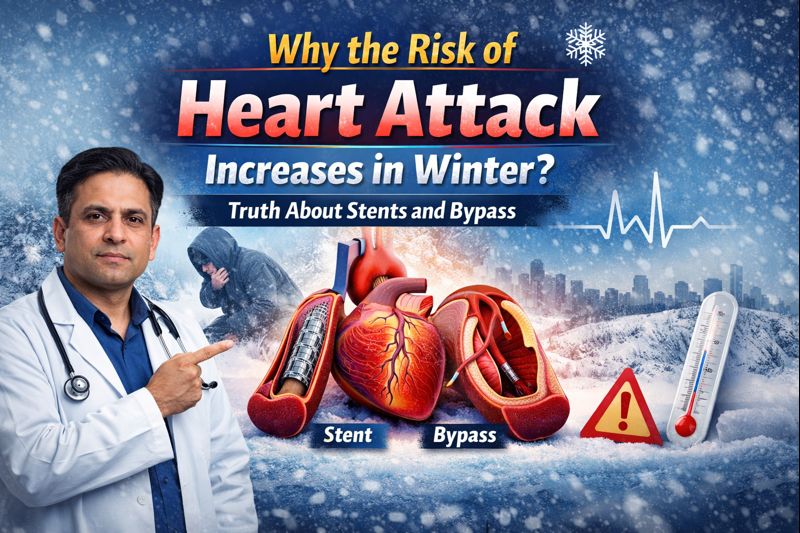
Heart attacks are no longer limited to older age groups. In recent years, cases among younger adults have increased, especially during the winter season. But why does cold weather raise the risk of heart attacks? What role do stents and bypass surgery really play?
In a detailed video by the YouTube channel In Good Hands, Dr. Praveen Singh Pundir, an experienced interventional cardiologist, explains these important questions in a simple and scientific way. You can watch the full video here:
👉 https://youtu.be/mVZ03b6omjY?si=BbtrpELRMM50z7Kk
Why Are Heart Attacks More Common in Winter?
During winter, the body reacts to cold by narrowing blood vessels to preserve heat. This natural response increases blood pressure and adds extra strain on the heart. As a result, the heart must work harder to pump blood throughout the body.
Additionally, winter brings several lifestyle changes that increase cardiac risk:
- Reduced physical activity due to cold weather
- Increased consumption of high-fat and salty foods
- Lower exposure to sunlight affecting metabolism
- Higher chances of blood thickening and clot formation
All these factors together significantly increase the likelihood of a heart attack during winter months, especially in people with existing heart conditions, diabetes, high blood pressure, or a sedentary lifestyle.
Understanding Heart Blockages
Dr. Pundir explains that heart attacks mainly occur due to blockages in the coronary arteries, which supply blood to the heart muscle. These blockages develop over time because of cholesterol buildup, smoking, unhealthy diet, stress, and lack of exercise.
Cold weather can worsen existing blockages by reducing blood flow and increasing clot formation, which may suddenly block an artery and trigger a heart attack.
Stent vs Bypass: What Is the Real Difference?
One of the key points discussed in the video is the difference between stent placement and bypass surgery.
Stent
A stent is a small mesh-like tube inserted into a blocked artery to keep it open and restore blood flow. It is usually recommended when:
- One or two arteries are blocked
- The blockage is localized
- The patient is stable
Bypass Surgery
Bypass surgery is performed when:
- Multiple arteries are severely blocked
- Blockages are long or complex
- The patient has diabetes or weak heart function
In bypass surgery, a new route is created for blood to flow around blocked arteries.
Dr. Pundir emphasizes that stents and bypass are treatments, not permanent cures. Without lifestyle changes, blockages can return even after these procedures.
Early Warning Signs You Should Not Ignore
Recognizing symptoms early can save lives. Common warning signs include:
- Chest pain or pressure
- Pain spreading to the left arm, jaw, or back
- Shortness of breath
- Excessive sweating
- Unusual fatigue or dizziness
Ignoring these symptoms, especially in winter, can be dangerous. Immediate medical help is essential.
How to Reduce Heart Attack Risk in Winter
According to Dr. Pundir, simple preventive steps can significantly reduce risk:
- Stay physically active with light exercise or walking
- Eat a heart-healthy diet with low salt and saturated fats
- Keep blood pressure, sugar, and cholesterol under control
- Avoid smoking and excessive alcohol
- Manage stress through meditation or relaxation techniques
- Keep the body warm in cold weather
Regular health checkups are especially important for people with known heart conditions.
Conclusion
Heart attacks in winter are not random—they result from physiological changes and lifestyle factors. Understanding the risks, knowing the truth about stents and bypass surgery, and making consistent lifestyle improvements can protect your heart.
The video from In Good Hands with Dr. Praveen Singh Pundir highlights one crucial message: prevention and early action are just as important as medical treatment.
Watch the full video here:
👉 https://youtu.be/mVZ03b6omjY?si=BbtrpELRMM50z7Kk
#ingoodhands #winterheartattackrisk #heartattackcausesinwinter #stentvsbypass #heartstentmeaning #bypasssurgeryexplained #coronaryarteryblockage #heartattackpreventioninwinter