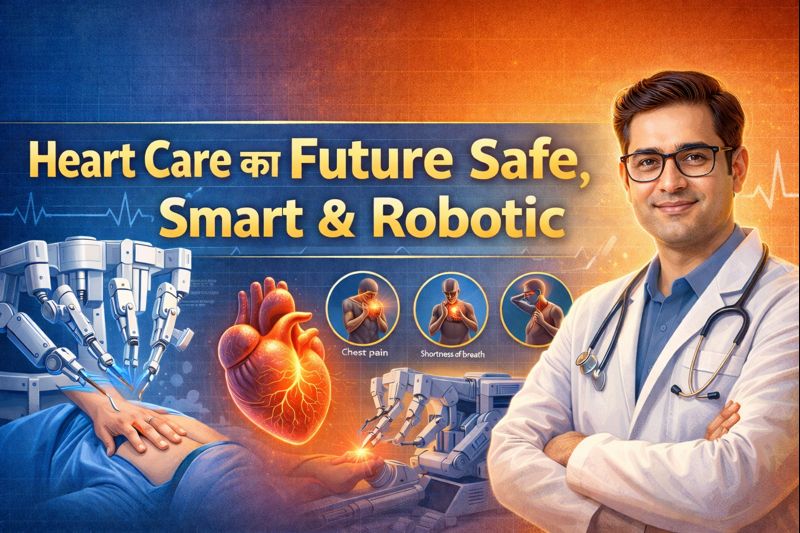
Many people worry about heart health but don’t truly understand how heart attacks happen, what immediate steps can save a life, or how modern technology like robotic surgery is changing treatment. In this episode of In Good Hands, Dr. Varun Bansal gives a clear explanation of heart symptoms, emergency response, and the future of cardiac care in India.
To see the full explanation, watch the original video here:
Watch the full YouTube video
Why This Video Matters
Heart attacks are becoming more common — even in younger people — yet most individuals do not know:
- How to identify the early signs
- What to do during a cardiac emergency
- How CPR works
- How robotic surgery reduces risks and speeds up recovery
This video simplifies these topics and helps viewers understand exactly how to react and when to get medical help.
Watch the full discussion here:
Robotic Heart Surgery & Emergency Care — In Good Hands
Key Takeaways from the Video
1. Heart Attack Symptoms Are Often Misunderstood
Dr. Bansal explains that heart attack symptoms don’t always look dramatic.
Some people feel:
- Mild chest tightness
- Left arm discomfort
- Upper back pain
- Sweating or sudden weakness
Many ignore these early signs, thinking it’s acidity or stress — but these symptoms need immediate attention.
See this explanation in the video:
Heart Attack Warning Signs – Full Video
2. CPR Knowledge Can Save Lives
The doctor emphasizes that every person should know CPR, not just medical professionals.
In a cardiac arrest:
- The heart stops pumping
- The brain begins losing oxygen within seconds
- CPR keeps blood flowing until help arrives
He also explains the correct rhythm and pressure needed for effective CPR — something that could help a family member or friend in an emergency.
Learn more in the video:
Emergency CPR Techniques – In Good Hands
3. Robotic Heart Surgery Provides Safer, Precise Treatment
One of the most important parts of the video is the explanation of robotic heart surgery.
Dr. Bansal describes how robotic systems allow surgeons to:
- Make smaller incisions
- Reach complex areas with better precision
- Reduce bleeding and infection
- Shorten hospital stay
- Speed up recovery
This technology isn’t replacing doctors — it is supporting them to perform more accurate and safer procedures.
Watch this part here:
Understanding Robotic Heart Surgery
3. Lifestyle Plays a Big Role in Heart Health
The doctor highlights daily habits that contribute to heart problems:
- Smoking
- Lack of exercise
- Uncontrolled stress
- Irregular sleep
- High salt and junk food consumption
He explains that simple changes in routine can reduce heart attack risk significantly.
See this breakdown here:
Heart Health & Lifestyle – Full Explanation
4. Practical Tips Shared in the Video
The video suggests clear, actionable steps:
- Get regular health checkups
- Walk or exercise daily
- Eat balanced food with low oil and salt
- Avoid smoking and excessive alcohol
- Manage stress with meditation or yoga
- Learn CPR — it may save a life
- Do not ignore chest discomfort at any time
For full recommendations, watch the video:
https://youtu.be/2aJ2oMTopS4?si=G9uQIuXTZv5d8GCv
Final Thoughts
Cardiac emergencies can be prevented — and even reversed — when people recognize symptoms early, stay aware of CPR, and make heart-healthy lifestyle choices. Robotic surgery is another powerful advancement that is improving outcomes for thousands of patients in India.
If you want to understand heart health better and learn how to respond in emergencies, watch the complete video here:
https://youtu.be/2aJ2oMTopS4?si=G9uQIuXTZv5d8GCv