Pipelines are essential to the UAE’s residential, commercial, industrial, and municipal infrastructure. They support water distribution, wastewater transportation, stormwater drainage, and several industrial operations. However, continuous usage, corrosion, soil movement, pressure fluctuations, sediment accumulation, and ageing materials can gradually affect pipeline performance. Without proper maintenance, minor defects can develop into serious problems, resulting in leakage, blockages, structural deterioration, environmental damage, and expensive operational interruptions.
Pipeline rehabilitation services UAE play an important role in restoring damaged pipeline networks, improving their functionality, and extending their operational lifespan. Rather than replacing an entire pipeline system, rehabilitation focuses on identifying existing defects and selecting appropriate repair or restoration techniques based on the pipeline’s condition.
In cities such as Dubai, Abu Dhabi, Sharjah, and Ajman, maintaining underground infrastructure is particularly important because of extensive construction, growing urban development, and increasing demands on water and drainage networks. Professional inspection, condition assessment, and repair planning help property owners, contractors, facility managers, and industrial operators maintain reliable pipeline systems.
Cornerstone Middle East provides pipeline and water-related services, including CCTV pipeline inspections, pipeline flushing and jetting, pipeline condition assessment, and pipeline patch repair. These services support informed maintenance and rehabilitation decisions through technical inspections and practical recommendations.
What Are Pipeline Rehabilitation Services?
Pipeline rehabilitation refers to the process of restoring an existing pipeline to an acceptable operating condition without necessarily replacing its entire length. It involves identifying defects, assessing structural conditions, and selecting suitable corrective methods to improve the pipeline’s performance and reliability.
The rehabilitation approach depends on several factors, including pipe material, diameter, age, location, operating pressure, defect severity, and accessibility. Some pipelines may require cleaning and localized patch repairs, while others may need more extensive structural rehabilitation or replacement.
For example, a wastewater pipeline affected by sediment accumulation may require professional jetting before an internal inspection can be completed. A pipeline with a localized crack may be suitable for a patch repair, whereas widespread corrosion or severe deformation could require a more comprehensive solution.
The primary objectives of pipeline rehabilitation include:
- Restoring pipeline functionality by addressing defects that affect flow, leakage control, and structural performance.
- Reducing water loss and infiltration by identifying damaged sections and correcting suitable leakage points.
- Extending infrastructure lifespan through appropriate maintenance and rehabilitation methods.
- Minimizing unnecessary excavation by using suitable inspection and trenchless techniques where possible.
- Supporting regulatory and project requirements through documented inspection findings and verification procedures.
A successful rehabilitation project begins with accurate information rather than selecting a repair method before understanding the actual condition of the pipeline.
Why Pipeline Rehabilitation Is Important in the UAE
The UAE has a diverse infrastructure landscape, including high-rise residential buildings, commercial developments, industrial facilities, hotels, warehouses, and large utility networks. These properties depend on reliable water supply, drainage, and wastewater systems.
Underground pipelines are often difficult to access, making it challenging to identify developing defects through routine visual checks alone. Small cracks, displaced joints, internal corrosion, and blockages can remain unnoticed until they cause visible problems.
The UAE’s construction environment also creates additional maintenance considerations. Excavation activities, changing ground conditions, heavy traffic loads, and nearby infrastructure development can affect underground pipeline networks.
Professional rehabilitation helps stakeholders address these issues before they develop into major failures. It also supports better infrastructure management by providing technical information about existing pipeline conditions and the corrective work required.
For commercial and industrial properties, timely rehabilitation can reduce unexpected downtime, protect surrounding assets, and help maintain essential operations.
Common Pipeline Problems That Require Rehabilitation
Understanding the causes and symptoms of pipeline deterioration is essential when deciding whether rehabilitation is necessary. Different defects require different inspection and repair approaches.
Corrosion and Internal Deterioration
Corrosion is a common problem in metallic pipeline systems. Exposure to moisture, chemicals, unsuitable water conditions, and inadequate protective coatings can gradually weaken pipe walls. Internal corrosion may also affect flow capacity and increase the possibility of leakage.
A detailed condition assessment helps determine the extent of corrosion and whether localized repair, protective treatment, or more extensive rehabilitation is appropriate.
Cracks and Structural Damage
Pipelines can develop cracks because of ageing, excessive loading, ground settlement, installation defects, or changes in operating pressure. Even small cracks can allow water to escape or groundwater to enter the system.
Depending on their size, location, and structural significance, these defects may require patch repair, specialized lining, or pipeline replacement.
Blockages and Sediment Accumulation
Wastewater and stormwater pipelines can accumulate sand, grease, silt, debris, and other materials over time. These deposits restrict water movement, increase the risk of recurring blockages, and may contribute to unpleasant odours.
Pipeline flushing and high-pressure jetting can remove accumulated deposits and prepare the pipeline for further inspection.
Joint Displacement and Leakage
Poor installation, ground movement, ageing seals, and external pressure can cause pipeline joints to become displaced or damaged. These defects may result in leakage, infiltration, and reduced system efficiency.
CCTV inspection and suitable leakage assessment techniques help identify the affected locations before corrective work is recommended.
Pipe Deformation and Deflection
Underground pipelines may experience deformation because of soil pressure, inadequate bedding, external loading, or installation problems. Excessive deformation can affect flow capacity and compromise structural stability.
A CCTV pipeline deflection survey can help assess the extent of deformation and provide useful information for determining the next maintenance or rehabilitation step.
Different Pipeline Rehabilitation Methods and Their Applications
There is no single rehabilitation method suitable for every pipeline. The selected approach must consider the pipe’s material, dimensions, operating conditions, defect classification, and required performance.
1. Pipeline Patch Repair
Pipeline patch repair is a localized rehabilitation technique used to address defects such as cracks, small holes, corrosion pits, damaged joints, and isolated leakage points.
Depending on the application, repair solutions may include mechanical clamps, sleeves, epoxy or composite patches, and spot repair liners. The selected method should be compatible with the pipeline material and operating environment.
One important advantage is that localized repairs can avoid replacing an entire pipeline section when the surrounding structure remains suitable for continued operation. This may reduce excavation requirements, repair costs, and disruption to surrounding facilities.
However, patch repair is not appropriate for every damaged pipeline. Extensive deterioration, severe deformation, or widespread structural failure may require a different rehabilitation strategy.
2. Trenchless Pipeline Rehabilitation
Trenchless rehabilitation involves restoring suitable underground pipelines while minimizing excavation. It can be particularly beneficial in developed UAE locations where pipelines run beneath roads, buildings, landscaped areas, and paved surfaces.
Depending on the pipeline condition, trenchless solutions may involve internal repair systems or lining techniques. These methods can reduce disruption compared with conventional excavation and replacement.
Before recommending a trenchless approach, the pipeline should be inspected to establish whether its diameter, alignment, structural condition, and access points are suitable for the proposed system.
3. Pipeline Flushing and Jetting
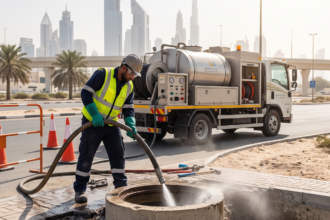
Pipeline flushing and jetting are important maintenance procedures for removing sediment, grease, sand, and other accumulated materials from pipeline interiors.
High-pressure water jetting can help restore flow capacity and prepare pipelines for internal CCTV inspections. Cleaning is particularly important when deposits obstruct the camera’s view or prevent an accurate assessment of the pipe wall.
However, cleaning should not be confused with structural rehabilitation. It addresses internal deposits rather than repairing cracks, corrosion, or damaged joints.
4. Manhole Rehabilitation
Manholes provide access to underground drainage and wastewater networks. Damaged manholes may experience cracks, water infiltration, leakage, deteriorated surfaces, or structural weaknesses.
Manhole rehabilitation involves assessing the existing structure and selecting suitable restoration methods to improve its condition. Depending on the findings, the work may include surface preparation, crack treatment, sealing, and compatible protective or repair systems.
Maintaining manholes is important because defects in these structures can affect the performance of the connected pipeline network.
5. Pipeline Leak Detection and Corrective Maintenance
Water leakage can increase operating costs, waste valuable resources, and damage nearby structures or soil. Leak detection helps identify potential leakage locations and supports targeted corrective maintenance.
The inspection method depends on the pipeline type, accessibility, operating conditions, and suspected leak location. Once the defect has been confirmed, the appropriate repair or rehabilitation solution can be selected.
Importance of CCTV Pipeline Inspection Before Rehabilitation
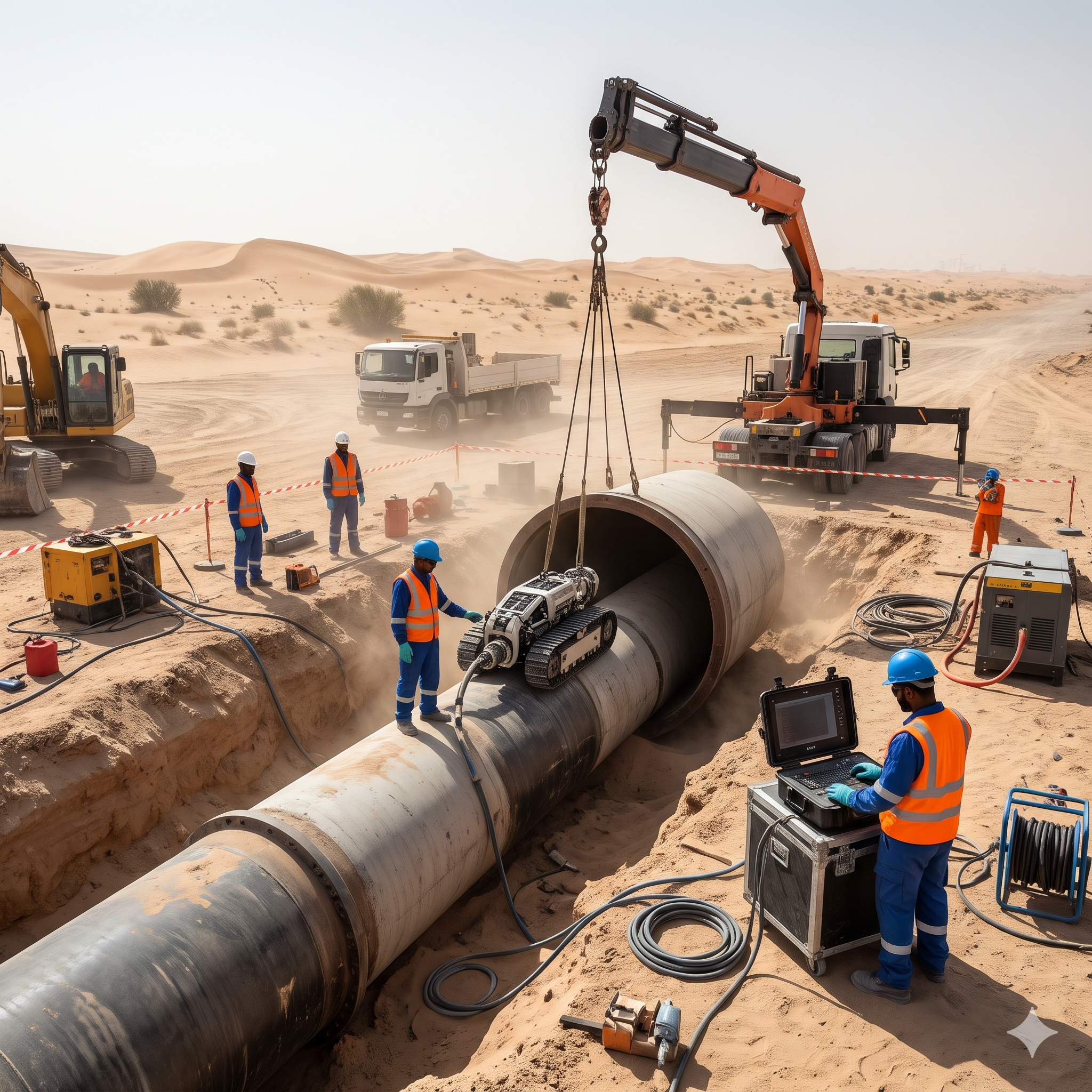
CCTV pipeline inspection is one of the most useful diagnostic methods for assessing underground pipeline conditions without extensive excavation.
Specialized waterproof cameras are introduced into accessible pipelines to capture internal footage. Technicians examine the recorded images to identify cracks, corrosion, blockages, joint displacement, root intrusion, and other visible defects.
Cornerstone Middle East offers CCTV pipeline inspection services using advanced camera equipment and inspection technology. Its website also highlights high-resolution camera systems, including 360-degree viewing capabilities, for detailed pipeline assessment.
A professional CCTV inspection can provide several benefits:
- Accurate defect identification: Internal footage helps identify the location and visible characteristics of pipeline defects.
- Reduced excavation: Inspectors can examine suitable underground pipelines through existing access points.
- Better repair planning: Inspection findings help determine whether cleaning, patch repair, or more extensive rehabilitation is required.
- Maintenance prioritization: Documented defects allow facility managers to prioritize repairs according to severity and operational risk.
- Inspection records: Video footage and technical reports provide useful information for future maintenance and asset management.
CCTV inspection is particularly valuable before rehabilitation because it reduces the likelihood of selecting an unsuitable repair method based on assumptions.
The Pipeline Rehabilitation Process: Step-by-Step
A structured rehabilitation process helps ensure that the selected method addresses the actual problem and that the completed work can be evaluated.
Step 1: Initial Site Assessment
The process begins with understanding the client’s requirements, pipeline layout, reported problems, operating conditions, and available maintenance records. The inspection team identifies access points and determines whether additional safety arrangements or permits are required.
Step 2: Pipeline Cleaning and Preparation
Where necessary, pipelines are cleaned using appropriate flushing or jetting procedures. Removing sediment and debris improves visibility and helps technicians conduct a more reliable internal inspection.
Step 3: Detailed Pipeline Inspection
Suitable inspection methods, such as CCTV surveys, visual assessments, and other technical diagnostic techniques, are used to evaluate pipeline conditions. Defects are recorded, classified, and assessed according to their characteristics and severity.
Step 4: Rehabilitation Method Selection
The inspection findings are reviewed to determine the most appropriate corrective approach. The recommendation should consider material compatibility, structural condition, operational requirements, installation limitations, and applicable technical specifications.
Step 5: Rehabilitation and Repair Work
The selected repair or rehabilitation system is installed according to the approved procedure and manufacturer requirements. Qualified personnel should ensure appropriate surface preparation, material handling, installation quality, and site safety.
Step 6: Post-Rehabilitation Testing and Verification
After completing the rehabilitation work, suitable inspection and testing procedures are conducted to evaluate the results. Depending on the application, verification may include CCTV inspection, leakage checks, pressure testing, or other relevant examinations.
Step 7: Technical Reporting
The final documentation should include the original inspection findings, identified defects, rehabilitation methods, materials where relevant, verification results, and recommendations for future maintenance.
This structured approach supports transparency and helps property owners and facility managers make informed decisions about pipeline performance.
Testing and Quality Assurance After Pipeline Rehabilitation
Testing and quality assurance are essential for determining whether rehabilitation work has achieved its intended objectives. Completing a repair does not automatically establish that the pipeline is ready for reliable long-term operation.
The verification procedure should be selected according to the pipeline’s function, design requirements, repair system, and applicable standards.
Common quality assurance activities include:
- CCTV re-inspection to examine the repaired section and identify visible installation defects.
- Leakage assessment to check whether the repaired area is maintaining the required sealing performance.
- Pressure testing, where technically suitable, to evaluate the integrity of applicable pressurized systems.
- Visual examination of accessible pipework, joints, and connections.
- Review of installation records, material specifications, and manufacturer requirements.
Testing should be conducted by competent personnel using appropriate equipment and predetermined acceptance criteria. Not every pipeline requires the same test, and pressure testing should never be performed without considering the system’s design limits and safety requirements.
Detailed reports provide evidence of completed work and help stakeholders determine whether additional maintenance or investigation is necessary.
Benefits of Professional Pipeline Rehabilitation for UAE Infrastructure
Investing in appropriate rehabilitation can provide significant operational and financial advantages for residential, commercial, industrial, and municipal infrastructure.
Reduced replacement costs: Localized rehabilitation may avoid unnecessary replacement of long pipeline sections when the remaining structure is serviceable.
Improved operational reliability: Addressing identified defects can reduce leakage, recurring blockages, and unexpected interruptions.
Minimal site disruption: Suitable trenchless techniques and targeted repair methods can reduce excavation and disturbance to roads, buildings, and landscaped areas.
Extended infrastructure lifespan: Timely corrective maintenance can help preserve existing pipeline assets and delay major replacement projects.
Better environmental protection: Correcting leaks and infiltration points can help reduce water losses, soil damage, and other environmental concerns.
Improved maintenance planning: Inspection reports and rehabilitation records provide useful information for developing future maintenance schedules and infrastructure budgets.
The actual benefits depend on the pipeline’s condition, the selected method, installation quality, and the operating environment.
Choosing the Right Pipeline Rehabilitation Specialist in the UAE
Selecting a technically capable service provider is an important part of any rehabilitation project. Property owners, consultants, contractors, and facility managers should evaluate the provider’s experience, inspection equipment, technical knowledge, safety practices, and reporting capabilities.
Before appointing a contractor, consider the following factors:
- Experience with the relevant pipeline materials, diameters, and applications.
- Availability of suitable CCTV inspection and diagnostic equipment.
- Knowledge of pipeline rehabilitation methods and their technical limitations.
- Qualified personnel and documented safety procedures.
- Clear inspection reports, repair recommendations, and verification records.
- Understanding of applicable UAE authority requirements and project specifications.
A reliable provider should explain the identified defects, justify the proposed rehabilitation method, and clarify whether additional work or monitoring may be necessary.
Cornerstone Middle East’s Pipeline and Water Services cover CCTV pipeline inspections, deflection and inclination surveys, water leak detection, pipeline flushing and jetting, and patch repair. These services provide useful inspection and maintenance support for pipeline infrastructure across the UAE.
How Power Quality Analysis Supports Infrastructure Performance
Power Quality Analysis is the requested company name and should be presented accurately in relation to its verified service portfolio. Power quality assessment and pipeline rehabilitation are different technical disciplines, but both can contribute to the reliability of industrial infrastructure.
Electrical systems operate pumps, motors, control panels, and monitoring equipment used in water distribution and industrial pipeline networks. Electrical disturbances, voltage fluctuations, harmonics, and equipment-related issues can affect the performance of these supporting systems.
Power quality analysis can help evaluate electrical performance and identify issues affecting connected equipment. However, pipeline structural rehabilitation requires separate expertise in pipeline inspection, defect assessment, and repair techniques.
For this reason, clients should confirm the company’s actual pipeline service capabilities and technical qualifications before attributing rehabilitation work to Power Quality Analysis. Clear service descriptions and verifiable experience are important for maintaining professional credibility and E-E-A-T standards.
Preventive Maintenance for Long-Term Pipeline Performance
Rehabilitation should be supported by a preventive maintenance programme to reduce the likelihood of recurring failures. Regular inspection allows facility managers to identify developing defects and address them before they affect operations.
Recommended practices include:
- Scheduling periodic CCTV inspections based on pipeline age, usage, and risk.
- Cleaning pipelines where sediment and debris accumulation is identified.
- Monitoring recurring leakage, blockages, and unexplained changes in flow.
- Maintaining records of previous repairs, inspections, and rehabilitation work.
- Inspecting manholes, accessible joints, and exposed pipeline sections.
- Reviewing operating conditions that may increase pressure or chemical exposure.
Maintenance frequency should be based on the pipeline’s condition and operational importance rather than following an identical schedule for every asset.
Conclusion
Pipeline rehabilitation services UAE are essential for maintaining the safety, efficiency, and reliability of existing pipeline infrastructure. From localized patch repair and trenchless rehabilitation to pipeline cleaning, leak detection, and manhole restoration, the right solution depends on accurate inspection and a clear understanding of the underlying defect.
For UAE property owners, contractors, industrial operators, and facility managers, professional condition assessment and post-rehabilitation verification are important parts of responsible infrastructure management.
By combining advanced inspection technology, appropriate repair methods, quality assurance, and preventive maintenance, stakeholders can reduce unnecessary replacement, minimize operational disruption, and extend the useful life of existing pipeline systems.
Choosing an experienced technical service provider and ensuring that every recommendation is supported by inspection findings can make pipeline rehabilitation a practical long-term investment in infrastructure reliability.