A blocked drain in a Dubai tower, a grease-choked line behind a busy Abu Dhabi restaurant, or a silted stormwater pipe in Sharjah rarely stays a small problem. In a country where buildings run at high occupancy all year and infrastructure is expected to perform without interruption, a failing drainage network quickly turns into odour complaints, overflows, tenant disputes and costly emergency callouts. This is why Jetting Services in UAE have moved from being a reactive fix to a planned part of facility management.
This guide explains how Jetting Services in UAE work, why the local environment makes them especially relevant, and how a diagnostic-led approach, the kind promoted by engineering consultancies such as Cornerstone Middle East, separates a lasting solution from a temporary one.
What High-Pressure Jetting Actually Does
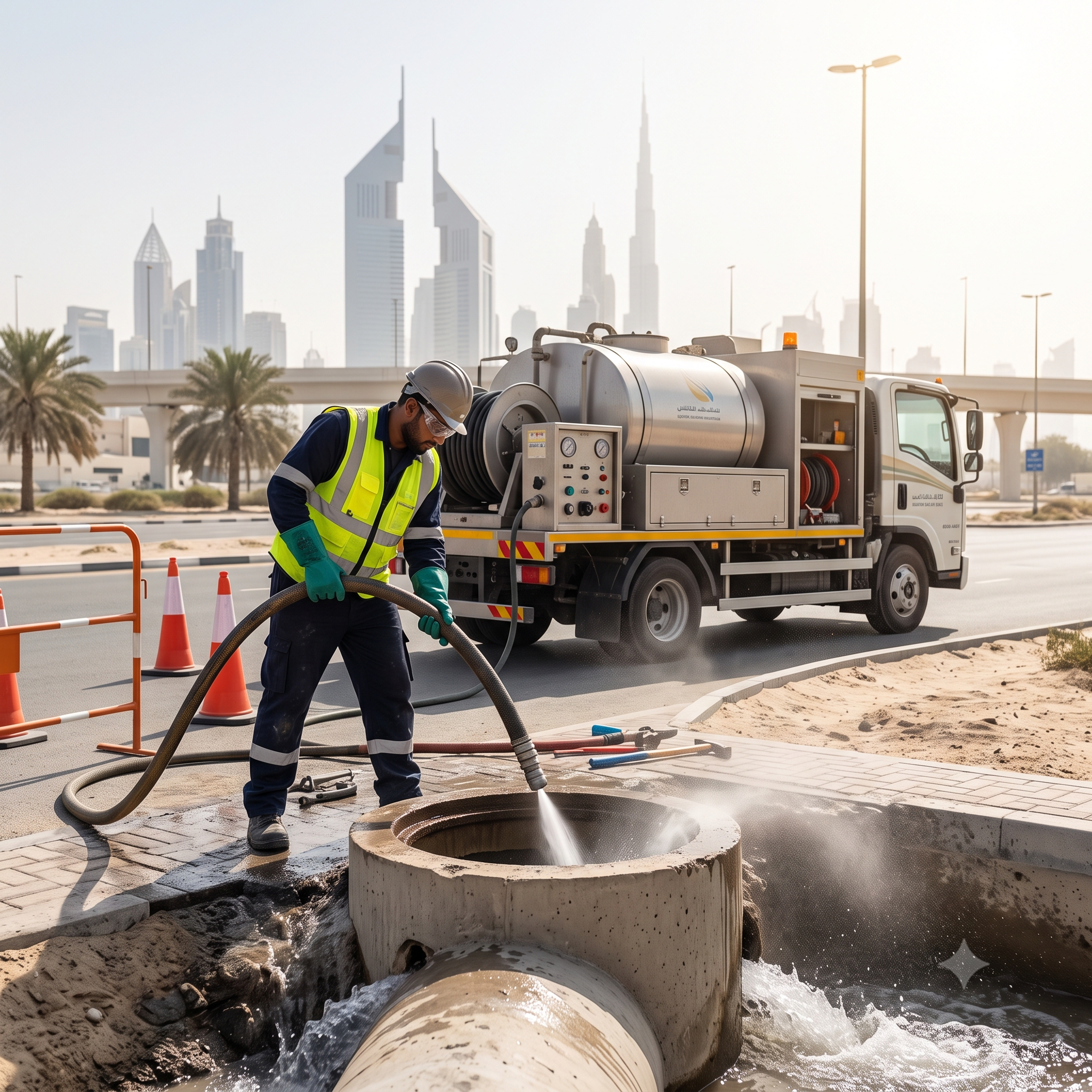
Water jetting uses a truck-mounted or trailer-mounted pump to push water through a flexible hose fitted with a specialised nozzle. The water leaves the nozzle as several fine, high-velocity streams. Some of these point backwards, pulling the hose forward along the pipe, while others point outwards to scour the pipe wall. The result is that grease, silt, sand, scale and loose debris are cut away and flushed downstream, where they can be collected by a vacuum tanker and disposed of properly.
Unlike rodding or chemical dosing, jetting cleans the full circumference of the pipe rather than punching a narrow hole through the blockage. Because it relies on mechanical force and flow instead of chemicals, it suits concrete, clay, PVC, HDPE and ductile iron pipes when the pressure and nozzle are chosen correctly.
Choosing correctly is where experience matters. A nozzle that suits a 150 mm branch line can be wrong for a 600 mm stormwater main, and pressure that clears soft grease can damage an already cracked pipe. A competent crew adjusts pressure, flow rate and nozzle type for each line instead of applying one setting everywhere.
Why Jetting Services in UAE Need a Specialist Approach
The Emirates create drainage problems that differ from those in cooler, wetter countries.
- Fine desert sand and dust wash into stormwater and sewer lines and settle wherever flow slows, gradually reducing pipe capacity.
- High ambient temperatures accelerate the breakdown of organic waste and the build-up of hydrogen sulphide, which attacks concrete and shortens the service life of sewers.
- The concentration of restaurants, hotels, labour accommodation and food courts produces large volumes of fats, oils and grease that harden inside pipes.
- Rapid construction leaves cement slurry, sand and general debris in newly laid lines, sometimes before the building is even handed over.
- Infrequent but intense rainfall tests stormwater networks that may have been neglected for months, and blocked lines are exposed very quickly when heavy rain arrives.
Because of these factors, no two jobs are alike. A hotel kitchen line, a residential riser and a municipal stormwater culvert each need a different method, a different schedule and different safety controls.
Jetting Is Only as Good as the Information Behind It
The most common mistake facility managers make is booking a jetting crew without first knowing what is inside the pipe. The crew clears the visible symptom, the water drains for a few weeks, and the blockage returns. The real cause, whether it is a collapsed section, an offset joint, root intrusion, a sagging gradient or a poorly connected branch, was never identified.
This is where testing and inspection work changes the outcome. A CCTV pipeline survey sends a camera through the line and records its condition in real time. The footage shows cracks, deposits, displaced joints, corrosion and hidden connections that no amount of surface checking would reveal. Cornerstone Middle East lists CCTV pipeline inspections across different network types among its pipeline and water services, which reflects a sound sequence of work: look first, clean second, and verify afterwards.
A well-run job usually follows these stages:
- A pre-cleaning survey to record the existing condition and locate defects, so that jetting is planned around real findings.
- Cleaning at a pressure and nozzle selection suited to the pipe material, diameter and type of deposit.
- Debris capture and removal, so that material is lifted out of the network instead of being pushed into the next section.
- A post-cleaning survey to confirm the pipe is clear and to identify defects that were previously hidden under deposits.
- A written report with video, observations and recommendations that the client can use for maintenance planning or contractor accountability.
The final point deserves emphasis. A documented before-and-after record protects the client in a dispute, supports handover on new projects, and gives the operations team a baseline for next year.
Where Jetting Services in UAE Fit Across Different Properties
Residential communities benefit from scheduled jetting of main drains, manholes and catchpits. Preventive cleaning is far cheaper than an emergency attendance at midnight.
Commercial and hospitality sites generate the heaviest grease loads. Grease traps, interceptor chambers and the lines downstream of them need regular attention, and a cleaning contract tied to a documented frequency is more reliable than waiting for complaints.
Industrial facilities must consider process residues and aggressive substances, so the method and disposal route need agreeing in advance with the relevant authority.
New developments need jetting and inspection at completion. Construction debris left in a new network becomes a defect from the first day of occupation, and a clear survey record at handover helps everyone involved.
Safety, Compliance and Environmental Responsibility
High-pressure water is dangerous. A hose under pressure can cause severe injury, and many drainage lines are confined spaces that may contain toxic or flammable gases. Reputable providers use trained operators, gas detection, permit-to-work procedures, barriers and appropriate protective equipment. They also carry insurance.
Waste handling matters just as much. Material removed from drains should go to approved disposal points, and wastewater must never be released into stormwater systems or the environment. Before awarding a contract, ask for method statements, risk assessments and disposal records. A provider unwilling to share them is a risk to your property and your reputation.
Looking at the Whole Building, Not Just the Drains
Facilities rarely fail in one system alone. Cornerstone Middle East works across electrical services, HVAC, thermography, building performance and pipeline and water services, and this wider view is useful because problems in one system often point to problems in another.
Electrical reliability is a good example. Pumps, jetting units and building plant depend on stable power, and poor supply quality can shorten equipment life or cause unexplained shutdowns. Power quality analysis measures voltage disturbances, harmonics, imbalance and similar issues, and it helps teams find the cause of nuisance trips and overheating before they become outages. Thermographic surveys can likewise reveal hot spots in electrical panels and mechanical equipment that are invisible to the naked eye.
The lesson is consistent across disciplines: measure first, act on evidence, and verify the result.
How to Choose a Provider You Can Trust
Price alone is a poor guide. When comparing proposals for Jetting Services in UAE, consider the following points carefully.
- Evidence of experience with the specific pipe type and site category you manage, supported by references you can actually contact.
- The ability to provide CCTV surveys and clear written reports, instead of verbal confirmation only.
- Documented safety procedures, trained personnel and valid insurance.
- Equipment suited to your pipe sizes, including access for confined or hard-to-reach areas.
- Transparent disposal arrangements that comply with local authority rules.
- Willingness to recommend repair, relining or redesign when cleaning is not the right answer.
The last point is a useful test of integrity. A provider who only ever recommends more cleaning is selling visits, not solutions. A trustworthy one will tell you when a pipe needs to be repaired and will show you the footage that proves it.
Planning a Maintenance Schedule That Works
The best results come from treating drainage as an asset with a lifecycle. Begin with a baseline survey, classify each line by risk, and give the most frequent attention to grease-prone and silt-prone sections. Repeat the survey after cleaning to measure improvement, and revise the plan each year using the records you have built. Well-planned Jetting Services in UAE lower emergency callouts, extend pipe life and give management a defensible budget. Timing matters too: cleaning before the rainy period keeps capacity available when it is needed most, while the right frequency for commercial kitchens should come from observed build-up rather than assumption.
Final Thoughts
Drainage is rarely noticed until it fails, yet it is among the most important systems in any building. Done well, Jetting Services in UAE protect property, keep occupants comfortable and prevent the small blockage that becomes a major repair. Done poorly, they hide problems and delay the bill.
The difference lies in preparation, evidence and accountability. Insist on a survey before and after cleaning, ask for documented safety and disposal practices, and choose partners who think about the whole building rather than a single line. If you manage property in the Emirates and want to understand the true condition of your pipelines, electrical systems or building performance, speak to the engineering team at Cornerstone Middle East at their Dubai office and ask how a diagnostic-led approach could support your next maintenance plan.