Electrical safety is not something any business, facility manager, or property owner can afford to overlook especially in the UAE, where large-scale industrial operations, high-rise commercial buildings, and critical infrastructure are part of everyday life. A single fault in your electrical grounding system can lead to equipment damage, operational downtime, fire hazards, or even fatal electric shocks.
One of the most essential yet often underestimated aspects of electrical safety is the earth pit resistance test. This test verifies that your grounding system is working correctly, offering a reliable path for fault current to safely dissipate into the ground. Without regular testing, you could be sitting on a compliance risk without even knowing it.
In this guide, we’ll walk you through everything you need to know about earth pit resistance testing: what it is, how it’s done, what the results mean, and why getting it professionally conducted in the UAE is a smart move for any facility.
What is an Earth Pit Resistance Test?
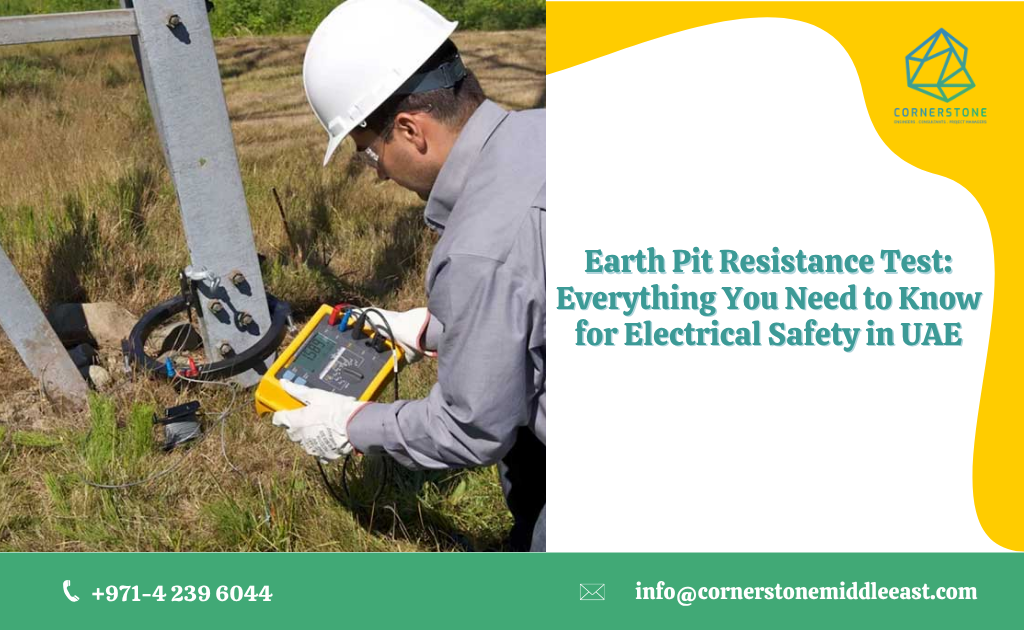
An earth pit resistance test measures the electrical resistance between an earth electrode (buried in the ground) and the surrounding soil. In simpler terms, it checks how effectively your grounding system can conduct fault current away from electrical equipment and structures into the earth.
Every electrical installation whether in a factory, hospital, data center, or commercial building requires a properly functioning earthing system. This system acts as a safety net. When a fault occurs, excess electrical current needs somewhere to go. The earth pit provides that path, preventing the current from passing through people, equipment, or structures.
The grounding resistance test confirms that this path is low enough in resistance to do its job efficiently. If the resistance is too high, the system may fail to respond properly during a fault, putting lives and equipment at serious risk.
Why is Earth Pit Resistance Testing Important?
There are several compelling reasons why earthing system inspection should be part of your regular maintenance schedule:
- Protection against electric shocks: A high-resistance earth pit may fail to divert fault current, increasing the risk of electrocution for anyone who touches faulty equipment.
- Fire prevention: Poor grounding can lead to arcing or overheating, both of which are common causes of electrical fires in commercial and industrial settings.
- Equipment protection: Sensitive machinery and electronic systems depend on a stable grounding reference. Without it, voltage spikes and transient surges can cause premature failure.
- Compliance with UAE electrical safety standards: The UAE follows DEWA (Dubai Electricity and Water Authority) regulations and related standards that require verified earthing systems. Non-compliance can result in penalties, failed inspections, or loss of operating licences.
- Reduced operational downtime: A faulty earthing system is a ticking time bomb. Catching issues early through regular grounding system testing prevents unexpected breakdowns.
- Insurance and liability protection: In the event of an electrical incident, documented proof of regular earthing inspections can significantly reduce liability exposure.
How is an Earth Pit Resistance Test Performed?
Professional earth pit testing services follow a structured process to ensure accurate, reliable results. Here’s a step-by-step breakdown of how the testing is typically carried out:
Step 1: Visual Inspection
Before any instrument is connected, the technician inspects the earth pit visually. This includes checking the condition of the electrode, the earth conductor, connections, and any visible signs of corrosion or physical damage.
Step 2: Preparation and Safety Precautions
The test area is isolated to prevent interference. Safety precautions are observed, including switching off relevant circuits where required and ensuring no live conductors are near the test probes.
Step 3: Setting Up the Earth Resistance Tester
A calibrated earth resistance tester (also known as a megger or earth tester) is used. The instrument is connected using the standard three-terminal or four-terminal configuration, depending on the method being applied.
Step 4: Fall-of-Potential Method
The most widely used technique is the fall-of-potential method. In this approach:
- The main earth electrode (C1/P1) is connected to the earth pit under test.
- A current electrode (C2) is placed at a known distance from the earth pit.
- A potential electrode (P2) is placed midway between the two.
- The tester injects a small alternating current and measures the voltage drop to calculate resistance.
Step 5: Taking Measurements
Readings are taken at multiple positions of the potential electrode (typically at 62% of the distance between the current and earth electrodes). Consistent readings across positions confirm a valid result.
Step 6: Recording and Reporting
All readings are documented in a test report. This report details the electrode locations, soil conditions, test method, results, and comparison against acceptable resistance values. A professional company will issue a formal certificate upon satisfactory completion.
Acceptable Earth Resistance Values
So, what is considered a “good” result in an earth resistance testing report? Here’s a general guide:
| Application | Recommended Resistance Value |
| General electrical installations | Less than 5 ohms |
| Commercial buildings | Less than 2 ohms |
| Industrial and critical systems | Less than 1 ohm |
| Sensitive equipment / data centers | Less than 0.5 ohms |
| Substations and power systems | Less than 1 ohm |
It’s worth noting that these are general benchmarks. The actual acceptable values may vary depending on the applicable standard, the type of installation, and the specific requirements of the system designer or authority having jurisdiction (AHJ) in your emirate.
Several factors can affect your readings, including:
- Soil type and moisture content Dry or sandy soil (common in the UAE) tends to have higher resistivity, making it harder to achieve low resistance values.
- Electrode depth and material Deeper, copper-clad electrodes typically perform better.
- Number of earth pits Multiple pits interconnected in parallel can bring resistance values down significantly.
- Seasonal variation Resistance values can fluctuate between summer and winter, particularly in areas with variable soil moisture.
Common Problems Found During Earth Pit Testing
Experienced technicians carrying out earthing inspection in UAE frequently encounter a number of recurring issues:
- Corroded electrodes: Metal electrodes exposed to moisture and chemicals in the soil can corrode over time, increasing resistance and reducing effectiveness.
- Loose or damaged connections: Poorly terminated conductors between the electrode and the distribution board are a frequent cause of high resistance readings.
- Dry soil conditions: In UAE’s arid climate, dry, sandy soil has naturally high resistivity. Without proper soil treatment or electrode enhancement, achieving low resistance values can be challenging.
- Inadequate electrode depth: Shallow earth pits may not reach moist soil layers, resulting in insufficient grounding.
- Damaged conductors: Physical damage to the earthing conductor whether from construction activity, rodents, or aging can compromise the system’s integrity.
- No regular maintenance: Earth pits that have never been tested or maintained often show severely degraded performance.
Benefits of Professional Earth Pit Testing Services in UAE
Engaging a certified electrical inspection services company for your earth pit resistance test offers far more value than just a compliance tick-box:
- Regulatory compliance: A professional test report demonstrates adherence to DEWA standards and other UAE electrical regulations, which is essential during audits and licence renewals.
- Accurate, calibrated results: Certified technicians use properly calibrated instruments, ensuring that readings are reliable and legally defensible.
- Detailed reporting: Professional companies provide comprehensive reports with test data, photographs, and recommendations documentation that’s essential for insurance and legal purposes.
- Preventive maintenance support: Regular testing helps detect problems early, before they evolve into costly failures or safety incidents.
- Expert recommendations: If issues are found, qualified inspectors can advise on remedial actions such as additional electrodes, chemical earthing enhancements, or conductor replacements.
- Long-term cost savings: Early detection is always cheaper than emergency repairs and operational losses from electrical failures.
Industries That Require Earth Pit Resistance Testing
Electrical compliance in UAE through regular earthing inspection is relevant across a wide range of sectors:
- Commercial buildings and offices Protect tenants, employees, and assets from electrical faults.
- Factories and manufacturing plants Heavy machinery and three-phase power systems demand robust grounding.
- Warehouses and logistics hubs Automation systems and conveyor equipment require stable grounding references.
- Hospitals and healthcare facilities Patient safety in clinical environments is critically dependent on reliable electrical earthing.
- Data centers and IT facilities Sensitive servers and network infrastructure are vulnerable to voltage irregularities caused by poor grounding.
- Construction sites Temporary electrical installations on active construction sites must be earthed and tested regularly.
- Oil and gas facilities In explosive atmospheres, proper grounding is a non-negotiable safety requirement.
- Hospitality and retail Hotels, malls, and restaurants must meet electrical compliance standards to operate safely and legally.
How Often Should Earth Pit Testing Be Conducted?
There is no one-size-fits-all answer, but the following general guidelines apply in most UAE contexts:
- New installations: Earth pit testing should be carried out before commissioning any new electrical installation.
- Annual testing: For most commercial and industrial facilities, an annual earth continuity test and earth pit resistance check is considered good practice.
- Post-event testing: After heavy rainfall, flooding, major construction nearby, or any significant electrical incident, an immediate retest is advisable.
- Periodic certification: Some regulatory bodies and insurance providers require certified test reports at defined intervals typically every 1 to 3 years.
- Maintenance-driven testing: Any time earthing components are replaced, extended, or modified, re-testing is mandatory.
For high-risk environments such as hospitals, data centers, and oil and gas sites, more frequent testing even quarterly may be warranted.
Choosing the Right Testing and Inspection Company in UAE
Not all inspection companies are equal. When selecting a provider for earth pit testing services in the UAE, keep the following in mind:
- Certified and experienced technicians: Look for companies with qualified electrical engineers experienced in UAE-specific regulations and standards.
- Calibrated, traceable instruments: Test equipment should be calibrated in accordance with national or international standards, with up-to-date calibration certificates.
- Proven track record: Choose a company with experience across a range of industries commercial, industrial, healthcare, and infrastructure.
- Comprehensive reporting: Your test report should be detailed, clear, and professionally formatted, suitable for submission to regulatory authorities.
- Fast response and flexible scheduling: Particularly for time-sensitive projects or annual compliance deadlines, responsiveness matters.
- Knowledge of local regulations: A company familiar with DEWA, ADDC, SEWA, and other UAE authority requirements will ensure your facility meets the right standards, not just generic international ones.
Frequently Asked Questions (FAQs)
1. What is the purpose of an earth pit resistance test?
An earth pit resistance test measures how effectively an earth electrode conducts fault current into the soil. It ensures your grounding system will function properly during an electrical fault, protecting people, equipment, and property.
2. What is an acceptable earth resistance value in UAE?
For most commercial installations in the UAE, an earth resistance value of less than 2 ohms is recommended. Industrial and critical systems may require values below 1 ohm. Your electrical consultant or inspector can advise on the specific value required for your installation.
3. How often should earthing inspection be done?
For most facilities, annual earthing inspection is advisable. High-risk environments such as hospitals, data centers, and oil and gas sites may require more frequent testing often quarterly or bi-annually. Always retest after any modifications to your earthing system.
4. Why does the UAE’s climate affect earth pit resistance?
The UAE’s hot, arid climate means the soil is often dry and sandy, both of which have high electrical resistivity. This makes it more challenging to achieve low resistance values, and is one reason why chemical earthing treatments and multiple interconnected electrodes are commonly used across the region.
5. Can I carry out an earth pit resistance test myself?
Technically, the test requires a calibrated earth resistance tester and trained personnel. While the equipment is commercially available, self-testing without proper training can lead to inaccurate results, missed hazards, or compliance issues. Professional testing by a certified company ensures the results are accurate, documented, and legally valid.
Conclusion
An earth pit resistance test is not just a regulatory formality it’s a fundamental measure that protects lives, preserves equipment, and keeps your operations running safely and legally. In the UAE’s demanding environment, where extreme heat, dry soil, and high-density electrical infrastructure are the norm, ensuring your earthing system is performing correctly is more important than ever.
Whether you manage a commercial tower in Dubai, an industrial plant in Sharjah, a healthcare facility in Abu Dhabi, or a logistics warehouse in Jebel Ali, regular and professional electrical safety testing in UAE is an investment that pays for itself many times over in prevented losses and avoided downtime.
Don’t wait for a fault to reveal a weakness in your grounding system. Contact our certified team today for professional earth pit resistance testing and earthing inspection services across the UAE. We provide accurate testing, detailed reports, and expert guidance to help you stay safe, compliant, and fully operational.