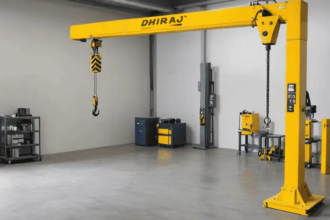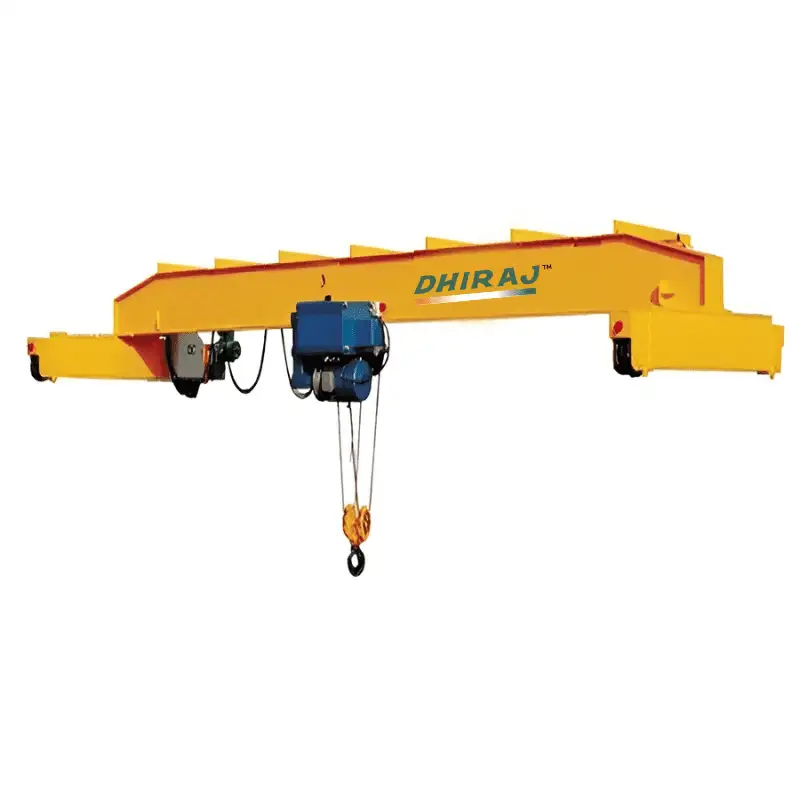
Industrial facilities worldwide face a common challenge: making the most of limited vertical space while ensuring safe and efficient material handling. This challenge has driven the demand for low headroom overhead crane, a specialized type of crane designed to operate in environments with restricted ceiling clearance.
Unlike conventional overhead cranes that require substantial vertical space for hoists and trolleys, low headroom cranes maximize lifting height and streamline workflows in compact facilities. Companies like Dhiraj Cranes, a leading crane manufacturer and supplier in India, provide robust solutions tailored to meet these specific industrial needs.
In this blog, we will explore the design, benefits, applications, and selection criteria for low headroom overhead cranes, offering insights into why they are essential in modern industrial operations.
Understanding Low Headroom Overhead Cranes
A low headroom overhead crane is a crane designed for facilities with limited vertical clearance. Its structure is compact, with hoist and trolley systems engineered to minimize the distance between the crane components and the ceiling. This enables facilities to lift heavy loads without sacrificing usable space or operational safety.
Key characteristics include:
Optimized height-to-lifting ratio for restricted spaces
High lifting capacity comparable to standard cranes
Precision control for safe and efficient operations
By implementing low headroom cranes, businesses can maintain maximum workspace for machinery, storage, or production lines, reducing the need for structural modifications and saving on operational costs.
Key Features and Advantages
Space Optimization
Low headroom cranes are ideal for facilities where every inch of space counts. Their design allows for higher lifting heights in constrained ceilings, freeing up overhead space for other equipment or storage solutions.High Lifting Capacity
Despite their compact design, these cranes can handle heavy loads—ranging from small components to several tons—ensuring operational efficiency without compromising strength or reliability.Enhanced Safety Features
Modern low headroom overhead cranes incorporate safety measures such as overload protection, limit switches, and ergonomic controls. These features prevent accidents, protect operators, and extend the lifespan of equipment.Cost Efficiency
By reducing the need for extensive structural changes and enabling efficient material handling, low headroom cranes help cut both installation and long-term operational costs.Energy Efficiency
Many models feature energy-saving electric hoists and variable frequency drives (VFDs), minimizing power consumption while maintaining smooth performance.Customizable Design
Facilities with unique layouts can benefit from cranes customized to meet their exact dimensions, load requirements, and operational conditions.
Applications Across Industries
Low headroom overhead cranes are highly versatile and are used across multiple sectors:
Manufacturing:
In factories, these cranes transport heavy materials or components between production stations, enhancing workflow and reducing manual labor.Warehousing and Logistics:
Limited ceiling space in warehouses can restrict the use of standard cranes. Low headroom cranes allow for high-density storage and easy retrieval of goods without compromising safety.Construction:
On construction sites, these cranes lift and position materials in areas with scaffolding or temporary structures, facilitating faster and safer assembly processes.Automotive Industry:
Engine components, chassis, and heavy assemblies can be moved efficiently within production and repair facilities using these cranes.Steel and Metal Fabrication:
Moving metal sheets, rods, and finished products safely and efficiently is crucial. Low headroom cranes provide precision lifting even in confined workshops.Food and Beverage Manufacturing:
Specialized cranes with hygienic coatings and corrosion-resistant materials can transport raw ingredients and packaged goods in compact production areas.
Cost-Benefit Analysis
Investing in a low headroom overhead crane provides measurable benefits:
Reduced Facility Modifications: Avoid costly structural changes to accommodate standard cranes.
Higher Production Efficiency: Faster material handling reduces idle time and increases throughput.
Lower Maintenance Costs: Designed for smooth operation and reliability, these cranes require less frequent servicing.
Energy Savings: Efficient hoists and motors lower electricity usage.
Safety and Compliance: Reduces workplace accidents and ensures compliance with industrial safety regulations.
In industrial operations where every square foot counts, the return on investment for a low headroom crane is often realized within months, thanks to optimized workflows and space utilization.
Why Choose Dhiraj Crane?
Dhiraj Cranes is a trusted name in the Indian crane industry, renowned for delivering customized and durable lifting solutions. Their expertise in low headroom overhead crane ensures that each facility receives a solution tailored to its vertical clearance, load requirements, and operational needs.
Product Offerings:
Low Headroom Electric Hoists:
Designed for limited vertical spaces, these hoists provide smooth lifting and high reliability for loads up to several tons.Single and Double Girder EOT Cranes:
Dhiraj Crane’s EOT (Electrically Operated Overhead) cranes are engineered for heavy-duty applications, combining strength with compact design.Custom Engineering Solutions:
Every facility has unique challenges. Dhiraj Crane offers tailored solutions including customized spans, hoist types, and control systems to ensure maximum efficiency.Installation and Maintenance Support:
Beyond manufacturing, Dhiraj Crane provides professional installation, regular maintenance, and after-sales service to guarantee long-term operational success.
Key Factors to Consider When Selecting a Low Headroom Overhead Crane
Vertical Clearance:
Measure available headroom to select a crane that maximizes lifting height while fitting the facility dimensions.Load Capacity:
Determine the maximum weight to ensure the crane handles all lifting requirements safely.Span and Coverage:
The distance between runway rails determines the crane span. Proper selection ensures smooth and efficient material flow.Hoist Selection:
Choose electric, VFD, or manual hoists based on precision, speed, and operational needs.Safety Features:
Check for overload protection, limit switches, emergency stops, and ergonomic controls.Operational Environment:
Consider factors like temperature, humidity, and corrosive environments to select materials and coatings suitable for the application.
Dhiraj Crane’s experts guide clients through these factors to design a crane system that meets both operational and safety standards.
Real-World Case Study
A medium-sized manufacturing facility faced challenges moving heavy machinery within a production hall with only 4 meters of headroom. Traditional cranes could not be installed without significant structural modifications. Dhiraj Crane supplied a custom low headroom overhead crane with a 5-ton capacity and a compact hoist system.
Results:
Installation completed without structural changes
Lifting efficiency increased by 35%
Safe operation ensured with integrated safety features
Facility space optimized, enabling additional production lines
This case demonstrates how low headroom cranes can transform operational efficiency while saving costs.
Conclusion
The low headroom overhead crane is an essential tool for modern industries that need to maximize vertical space, ensure safety, and improve operational efficiency. Their compact design, robust lifting capabilities, and customizable options make them versatile across manufacturing, warehousing, construction, and more.
Dhiraj Cranes offers industry-leading solutions in low headroom crane design, engineering, and support, helping businesses achieve safer, more efficient, and space-optimized operations. By choosing Dhiraj Crane, industrial facilities can enhance productivity, reduce operational costs, and ensure long-term reliability.
For more information, specifications, and product inquiries, visit Dhiraj Crane.