Bourbon vanilla is one of the most valued and widely used natural flavor ingredients in the world. It plays an important role in food manufacturing, beverage formulation, bakery production, dairy processing, confectionery development, fragrance blending, and personal care product creation. Its appeal is not only based on taste and aroma but also on consistency and performance across different processing environments. Companies in these sectors often need ingredients that can deliver the same sensory outcome from one batch to the next. Bourbon vanilla has the reputation of achieving this more reliably than many other natural flavoring materials. Among the leading suppliers committed to offering high-quality bourbon vanilla is Robust Madagascar, a company deeply connected to Madagascar’s vanilla cultivation and curing heritage.
To understand why Bourbon vanilla holds such a strong place in professional product development, it is helpful to look at its origins, natural characteristics, cultivation methods, curing techniques, flavor properties, and long-term usability. Each stage of its journey from orchid to finished bean influences how it behaves in production environments. This blog explores these areas in depth.
Origin and Identity of Bourbon Vanilla
Bourbon vanilla comes from the orchid species Vanilla planifolia. It is not named after the bourbon spirit but after a historical region. The name is linked to the island of Réunion, formerly known as Île Bourbon, where commercial vanilla cultivation was first organized in the 19th century. Over time, the cultivation techniques were adopted by neighboring Indian Ocean islands, especially Madagascar, which today has become the primary source of Bourbon vanilla for the entire world.
Although many regions produce vanilla, the beans grown in Madagascar have a distinct aroma and flavor that set them apart. Climate, soil characteristics, plant genetics, and traditional curing methods all contribute to this unique profile. Because of these factors, Bourbon vanilla from Madagascar is often considered the highest standard of natural vanilla available for large-scale use.
Climate and Geographical Influence
Madagascar offers an environment perfectly suited to vanilla cultivation. Warm temperatures, consistent humidity, and fertile volcanic soil create favorable conditions for the orchid to flourish. The plant grows as a climbing vine, wrapping around support trees and absorbing nutrients slowly over time. It takes at least three years from planting before the vine begins to flower, which means farmers must be patient and experienced in managing plant health over multiple growing cycles.
Weather patterns also influence flavor formation. Sunlight exposure, rainfall timing, and seasonal temperature changes all contribute to the development of natural oils in the vanilla pods. These oils are responsible for the signature fragrance associated with Bourbon vanilla. The geography of Madagascar, particularly the northern and eastern regions where vanilla is grown most intensively, allows the plants to mature under stable environmental rhythms. This contributes to strong aroma expression and richer vanillin content.
Robust Madagascar works with farming communities that have spent generations understanding these environmental details, maintaining cultivation practices that support both flavor quality and plant sustainability.
Hand Pollination and Flower Management
One of the most remarkable aspects of Bourbon vanilla production is the manual pollination process. Vanilla orchids have a delicate internal structure that prevents natural pollination by wind or insects. Each flower blooms for only a single day during the flowering season. If it is not pollinated within that short window, it falls off without producing a bean.
Farmers must pollinate each flower by hand, using a small stick or fingertip to gently lift the membrane separating the male and female parts of the flower. This technique requires precision and practice. The skill was discovered in the mid-1800s and remains the core of vanilla production to this day. The labor intensity required is one of the reasons Bourbon vanilla is more costly than many other natural flavor ingredients.
Successful pollination results in the growth of long green pods, which will eventually become vanilla beans. Timing is important during harvest. If the beans are collected too early, they will not have developed enough aroma. If left too long, they split and lose essential oils. Experienced growers identify the right stage by observing color shifts and pod firmness.
The Curing Process and Flavor Development
The curing of Bourbon vanilla is where its aromatic personality truly forms. Freshly harvested beans have little fragrance. Their complex aroma develops through a slow and controlled curing cycle that can last six to nine months. The curing process involves several important stages:
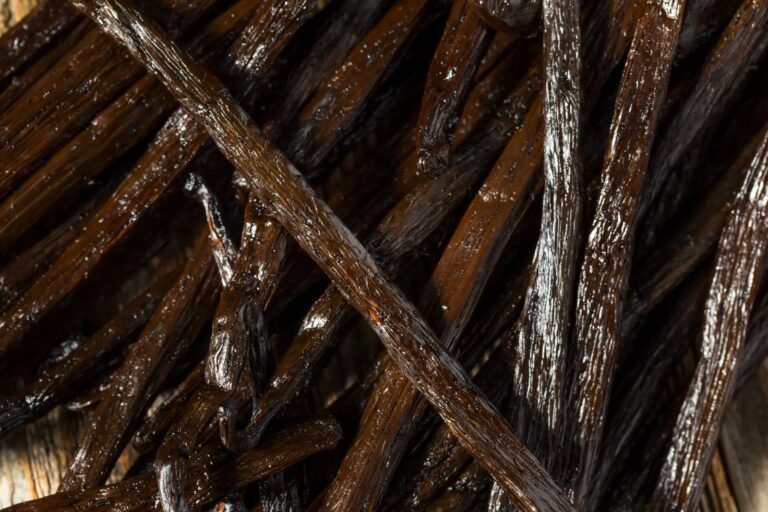
First, the beans are blanched to halt natural growth activity. This step activates internal enzymes. Next, they are wrapped to undergo what is known as “sweating,” a stage where heat and controlled moisture stimulate chemical changes that produce aroma compounds. After sweating, the beans are laid in sunlight daily to dry slowly. Sun-drying concentrates the oils and intensifies the fragrance. The beans are then conditioned for weeks to months in wooden boxes, allowing aroma molecules to stabilize and mature.
This extended curing is one of the main reasons Bourbon vanilla from Madagascar has such a deep, warm, and balanced fragrance. The process requires experience, patience, and attention to detail. Robust Madagascar follows traditional curing techniques to ensure aroma consistency, stable moisture levels, and quality appropriate for professional product development.
Aroma Profile and Sensory Benefits
The aroma of Bourbon vanilla is often described as creamy, sweet, warm, floral, and slightly woody. Its most defining component is natural vanillin, an organic compound responsible for the familiar vanilla scent. However, authentic bourbon vanilla contains more than 200 different aromatic molecules that interact to produce a layered, blended sensory profile. This is why natural bourbon vanilla tastes deeper and more rounded than synthetic vanillin, which contains only one aroma component.
These layered flavor characteristics make Bourbon vanilla especially valuable in food formulation. It enhances sweetness, softens bitterness, smoothens acidity, and enriches mouthfeel. It pairs well with chocolate, dairy, coffee, caramel, fruit blends, and baked ingredients. In beverages and syrups, it distributes evenly without overpowering other flavors. In fragrances and cosmetics, it provides a soothing, calming base note that blends gracefully with florals, amber, herbs, and soft spices.
Role in Product Manufacturing
In production environments, consistency is crucial. Consumers expect the same flavor experience every time they choose a product. Natural ingredients can vary by harvest and season, but well-graded Bourbon vanilla offers stability when sourced from reliable producers.
Companies involved in packaged food, baked items, ice cream, flavored milk, syrups, chocolates, herbal blends, teas, creams, lotions, balms, fragrances, and extracts benefit from using a flavor ingredient that behaves predictably under different processing conditions. Bourbon vanilla maintains aroma even when exposed to heat and blends well in both liquid and dry mixtures. This adaptability makes it useful across a variety of product categories.
Robust Madagascar focuses on supplying vanilla beans that maintain consistent moisture levels, aroma strength, and size grading, ensuring reliable performance throughout manufacturing processes.
Storage, Shelf Stability, and Long-Term Usability
Proper storage is essential to preserve Bourbon vanilla’s aroma and texture. Beans should be kept in airtight containers in a cool, dark location. Exposure to sunlight, excessive dryness, or high humidity can compromise quality. When stored correctly, bourbon vanilla maintains its flavor integrity for many months, making it suitable for large-scale purchasing and gradual usage.
Even after the seeds are scraped out, the remaining pod can be used to infuse flavor into sauces, creams, or syrups. This means that Bourbon vanilla offers long-term value beyond its initial application.
Ethical and Sustainable Sourcing
Responsible sourcing is increasingly important. Vanilla cultivation supports many rural communities in Madagascar. By maintaining long-term partnerships with farmers, companies such as Robust Madagascar help strengthen agricultural knowledge transfer, promote sustainable practices, and support economic stability. Ethical sourcing also ensures traceability, freshness, and transparency in product quality.
Conclusion
Bourbon vanilla is more than a flavor ingredient. It is a carefully cultivated agricultural product shaped by environmental conditions, manual skill, curing expertise, and time. Its value lies in both its sensory complexity and its consistency of performance in professional production environments. Madagascar remains the leading source due to its climate, soil, farming culture, and deeply rooted curing traditions. Robust Madagascar continues this heritage by supplying high-quality Bourbon vanilla that aligns with the needs of manufacturers requiring stable, natural flavor profiles and dependable supply.
As global markets continue to shift toward natural, authentic, and clean-label ingredients, Bourbon vanilla remains a key component supporting product quality, brand identity, and customer satisfaction.